
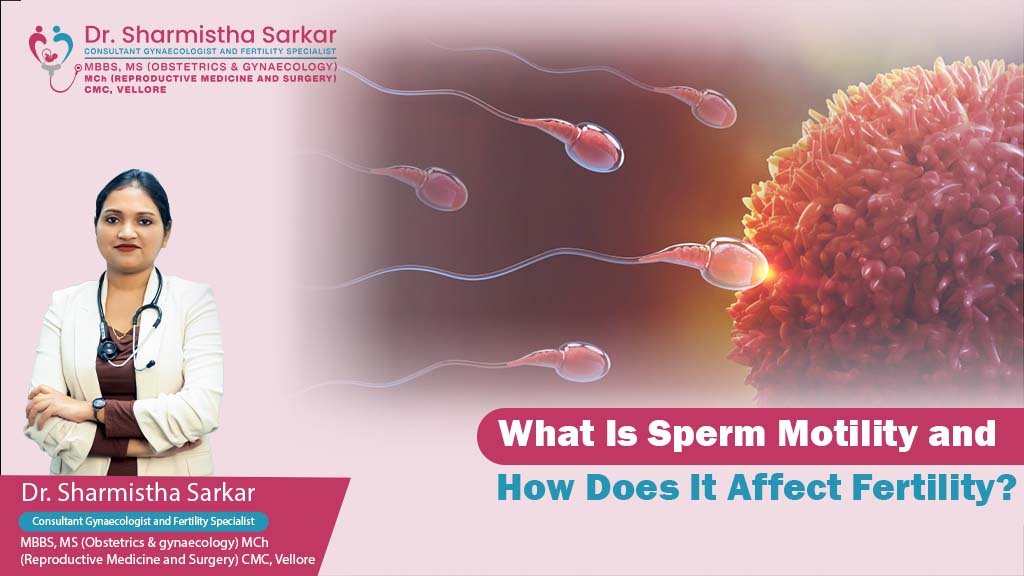
Ovulation, hormones, and timing are nearly always the focus of fertility discussions, but what if the problem isn’t the destination but rather the process? One of the most important yet often disregarded aspects of conception is sperm motility, or the capacity of sperm to swim with direction and purpose. Because if a sperm cannot travel, even the healthiest sperm are useless.
If you’ve been trying without success and everything “seems fine,” it may be time to examine the sperm’s movement rather than its existence.
The surprising part? Couples are not always aware that the motility problem can hinder their journey of parenthood. If you understand it is the first step toward finding the right treatment.
Types of Sperm Motility
There are two types of sperm motility:
- Progressive motility -Sperm moves forward straight or in a large circle.
- Non-progressive motility -Sperm will move but not progress forward effectively.
According to the World Health Organisation (WHO), healthy sperm motility is when 40 % of the sperm production has motility. Also 32% have progressive motility. If there is low sperm motility, it is called asthenozoospermia.
How Does Low Sperm Motility Affect Fertility?
Low sperm motility is one of the main reasons behind male infertility. The sperm would be considered useless if it cannot travel with ease.
Sperm motility controls whether the sperm will actually be able to get to the egg or not. They can reach far with a faster rate than others, thus also increasing chances of fertilization.
Roughly 40 to 50 % of male infertility cases are believed to be due to low sperm motility, otherwise known as male factor infertility. The positive aspect is that the condition of low sperm motility can be diagnosed and treated.
Low Sperm Motility Causes
Low sperm motility can have a variety of possible causes. Some are lifestyle-related. Still others are medical or genetic.
1. Lifestyle Factors
- Smoking robs sperm DNA and makes it less mobile
- Testosterone levels drop due to alcohol consumption
- Sperm quality can be affected by hormone disruption caused by obesity
- Do not wear tight underwear
- Stress can hinder your reproductive health.
2. Medical Conditions
One of the most common causes is varicocele or any enlargement of the vein in the scrotum. It makes the scrotum warm up and affects the production of sperm.
- An infection, such as a sexually transmitted infection (STI) or prostate inflammation, may harm sperm.
- Hormonal problems – low levels of testosterone or thyroid problems affect sperm development.
- Antisperm antibodies – the immune system attacks the sperm.
3. Environmental and Occupational Causes
- If you are exposed to chemicals, heavy metals, and pesticides for a long time, your sperm count may be less.
- Radiation or putting a laptop on the lap for an extended period can harm sperm motility.
4. Genetic Factors
There are some cases in which men have genetic disorders that have an impact on how their sperm moves or is being produced at the cellular level. These need a special diagnosis.
Low Sperm Motility Symptoms
It’s the hard part. The symptoms of low sperm motility may not be seen.
The vast majority of men experience neither any symptoms nor any health issues. No discharge, signs, or pain. The real test to determine this will only be with the semen analysis.
In some cases, men will be able to observe:
- Difficulty in conceiving after regular unprotected sex for more than a year. When your partner is above 35 years.
- If associated with low levels of testosterone, this may include decreased libido (sex drive).
- Swelling or pain in the testicular area (if varicocele is the cause).
- If you have difficulty with erections or ejaculation (sometimes).
Do not wait. If you diagnose first, you get better results.
How Is Sperm Motility Diagnosed?
Low sperm motility is easily diagnosed.
The major test is the semen analysis. It is a non-invasive, easy-to-perform procedure. A sample is taken and tested in a laboratory. The report shows:
- Sperm count
- Sperm motility (progressive and total)
- Sperm morphology (shape)
- Volume and pH of semen
Sometimes further tests are required:
- Tests of blood hormones FSH, LH, and testosterone
- Scrotal ultrasound (to check for varicocele)
- Genetic testing (for chromosomal problems)
- Anti-sperm antibody test
Low Sperm Motility Treatment Options
Treatment for low sperm motility will vary depending on the cause. There is no one-size-fits-all approach.
1. Lifestyle Modifications
These simple changes can make a huge difference for lots of men:
- Stop smoking
- Do not consume alcohol much
- Keep a healthy weight with good nutrition and exercise.
- Wear breathable underwear
- Do yoga and meditation every day
2. Nutritional Supplements
Some nutrients help to keep sperm healthy:
- Vitamin B6 – required for making sperm.
- Folate -is used to form healthy sperm DNA
- Take Coenzyme Q10 (CoQ10) to increase mobility
- Take Vitamin C and E
- L-Carnitine -shown to improve progressive motility
Please note: Always seek medical advice before taking any supplements.
3. Treating Underlying Conditions
- Varicocele surgery (varicocelectomy) increases sperm motility.
- Hormone therapy is used to balance the hormones, such as FSH and/or testosterone.
- Anti-sperm antibodies—immunosuppressants.
4. Assisted Reproductive Techniques (ART)
In the case where natural conception is impossible, it is possible to resort to assisted techniques:
- Intrauterine Insemination (IUI) -washed active sperm are placed into the uterus. This shortens the distance for sperm to travel.
- In Vitro Fertilization (IVF) – conception by mixing of eggs and sperm in the laboratory. When the motility is moderately decreased, it is a good choice.
- ICSI (Intracytoplasmic Sperm Injection) -one healthy sperm is injected into the egg. Perfect for severe cases of low motility.
Dr. Sharmistha Sarkar specializes in helping couples choose the right path tailored to their unique situation.
Can Low Sperm Motility Be Improved Naturally?
Yes – particularly for lifestyle-related causes
Many men find relief from:
- A healthy antioxidant diet – leafy greens, nuts, berries, whole grains
- Moderate exercise done regularly (avoid too much cycling or high doses of steroids)
- Both healthy sleep (7-8 hours a night) and daytime rest.
- To manage the effects of stress and hydration.To cope with stress and hydration.
- It takes about 74 days for a sperm to mature. The changes in lifestyle may take 2–3 months to yield results. Be consistent.
When to Talk to a Fertility Specialist?
If you should consult a fertility specialist:
- You have sought to conceive for 12 months (or 6 months if your partner is over 35)
- Low motility or poor parameters in a semen analysis
- You have an existing disorder such as varicocele, hormone imbalance or an infection in the past
- Your partner has had several miscarriages.
Do not delay. Age does bring a decrease in fertility -in both males and females.
A Doctor Who Listens, Cares, and Treats
Dr. Sharmistha Sarkar, MBBS, MS (Obstetrics & Gynaecology), MCh(Reproductive Medicine and Surgery), CMC, Vellore, specialises in treating infertility problems.
She cares deeply about the patient and is listening and evaluating their needs and individualizing their treatment.
Her clinic provides:
- Advanced semen analysis and hormonal testing
- Expert evaluation of male and female fertility factors
- Individualized treatment -from lifestyle correction to IVF/ICSI
- Compassionate, confidential, and judgment-free care
Having trouble conceiving or getting pregnant can be stressful. You need a doctor who gets that and who is with you all the way!
Today, just take the first step! Don’t let doubts stop you, though!
Now is the greatest time to take steps to support sperm motility or fertility. Early diagnosis gives you additional options and increases your chances of becoming a parent.
Book Your Consultation with Dr. Sharmistha Today. Your journey to parenthood starts with a single step.