
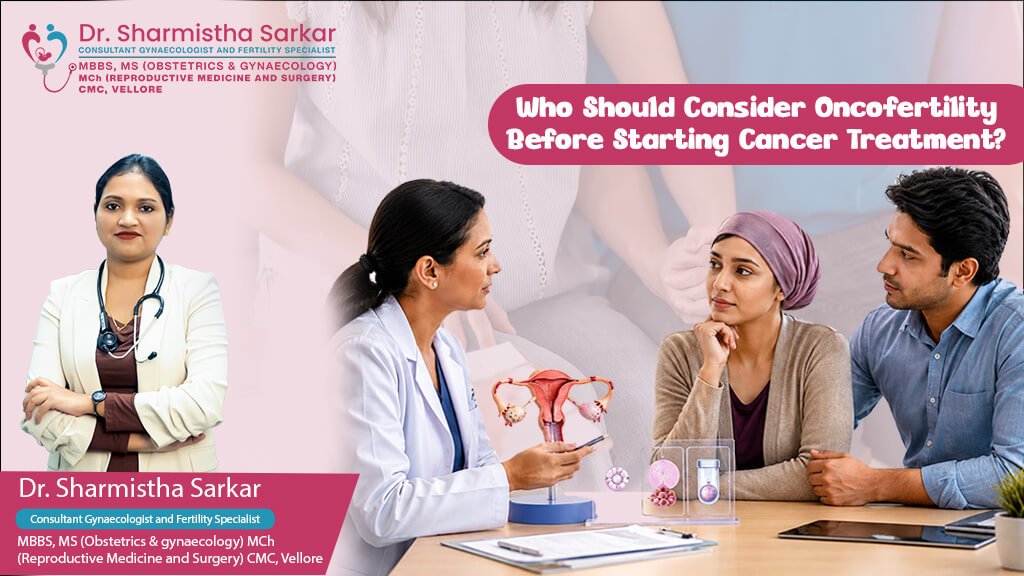
A cancer diagnosis changes everything in an instant.
The fear is real. The urgency is real. And in the middle of all that – your future, your family, your dream of having a child – can feel very far away.
But here is what most people do not know.
If you act before starting cancer treatment, you can protect that dream.
That is exactly what oncofertility is about.
It is a medical field that bridges cancer care and reproductive science. It gives patients a fighting chance at parenthood – even after going through chemotherapy, radiation, or surgery.
And the most important thing? The window to act is small. Once cancer treatment begins, some of that chance may be gone forever.
So who should consider before cancer treatment? Let us break it down simply.
What Exactly Is Oncofertility - and Why Does It Matter?
Oncofertility is the science of protecting your fertility before cancer treatment harms it.
Cancer treatments like chemotherapy and radiation are powerful. They target cancer cells – but they can also damage eggs, sperm, and reproductive organs in the process. For young patients especially, this can lead to permanent infertility.
Oncofertility treatment steps in before that happens.
Eggs, sperm, or embryos are preserved before treatment begins. This way, even after the most aggressive cancer therapy, patients have a real option to conceive in the future.
Think of it as saving your future – right now.
It is not about delaying cancer treatment. Most fertility preservation treatment procedures can be completed within two weeks. Cancer treatment continues on schedule.
It is simply about making sure you do not have to choose between fighting cancer and becoming a parent someday.
Who Should Consider Oncofertility?
This question matters more than most people realize.
- Young women with cancer: One of the most pressing candidates is young women who have cancer. Ovarian reserves can be affected by chemotherapy and radiation. A few treatments induce premature menopause. Preserving reproductive potential is possible with egg freezing or embryo freezing prior to treatment.
- Young men with cancer: It’s an issue that young men with cancer should think about as well. Chemotherapy has a harmful effect on the cells that make sperm. After just a couple of cycles, you can have permanent low sperm count or azoospermia. Sperm freezer prior to the treatment process is fast, non-invasive and very effective.
- Teenage and adolescent patients: For younger girls, the treatment of ovarian tissue freezing is available. Parents and oncologists are increasingly suggesting that the discussion should take place early.
- Blood cancers with leukaemia: Some of the most significant risks are for those with blood cancers such as leukaemia and lymphoma. These cancers are especially damaging to reproductive organs because of the chemotherapy treatments that are used. It is strongly recommended that cancer fertility treatment be done before beginning these protocols.
- Gynaecological cancers: For women who have gynaecological cancers, such as cervical, uterine or ovarian cancer, there is a significant discussion to be had. Depending on the stage and the type of cancer, some surgery may require the removal of reproductive organs. Before any treatment decision can be made, reproductive oncology treatment may consider organ-sparing and fertility preservation treatments.
- A newly-wed couple or a couple planning to conceive should definitely consult about this prior to the first chemotherapy treatment. It is crucial to get timing right.
If you fit into any of these categories – or if you know someone that does – talk to a fertility specialist isn’t an option. It is essential.
How Does Fertility Preservation Treatment Work?
The process is more straightforward than most people expect.
For women, the most common method is egg freezing – also called oocyte cryopreservation. Hormonal injections stimulate the ovaries to produce multiple eggs. These eggs are retrieved in a minor procedure and frozen for future use. The whole process takes about 10 to 14 days.
If the patient has a partner, embryo freezing is also an option. Eggs are fertilised and the resulting embryos are stored. This has a strong track record of success.
For women who cannot delay treatment even for two weeks, ovarian tissue freezing is an emerging option. A portion of ovarian tissue is removed, frozen, and re-implanted after cancer treatment is complete.
For men, sperm banking is the simplest and most accessible form of fertility preservation treatment. A semen sample is collected and frozen. It takes less than an hour. The sample can be stored for years and used for IVF or ICSI when the time comes.
Every case is different. A specialist in reproductive oncology treatment will assess your diagnosis, treatment plan, and timeline – and recommend the best approach for you.
Does Fertility Preservation Delay Cancer Treatment?
This is the most common concern. And it is completely understandable.
The answer is -usually no.
Most oncofertility treatment procedures are designed to fit within the window between diagnosis and the start of cancer treatment. For egg freezing, that window is approximately 10 to 14 days. Sperm banking takes just one appointment.
Oncologists and fertility specialists work together. The goal is always to protect your health first -and your reproductive future second. These two priorities do not have to conflict.
In fact, many leading cancer centres now recommend that every patient of reproductive age be referred to a fertility specialist before treatment begins. It is becoming a standard part of cancer fertility treatment conversations worldwide.
The earlier you ask, the more options you have.
What Are the Risks of Not Considering Oncofertility?
Skipping this step can mean permanent regret.
Chemotherapy drugs – especially alkylating agents – are highly toxic to the reproductive system. They can destroy egg reserves in women and drastically reduce sperm counts in men. Some patients recover fertility over time. Many do not.
For women, this can mean premature ovarian insufficiency – essentially, early menopause. For men, it can mean irreversible azoospermia. In both cases, natural conception becomes impossible.
The heartbreak is not just medical. It is deeply personal.
Many cancer survivors, once in remission, want to build families. Those who did not explore oncofertility options before treatment often find that door closed.
That conversation – the one you have with a fertility specialist before chemotherapy starts – can make all the difference.
Why Consult Dr. Sharmistha Sarkar for Oncofertility in North Bengal?
Dr. Sharmistha Sarkar is a leading IVF and fertility specialist based in Siliguri, North Bengal. She holds an MBBS and MS in Obstetrics and Gynaecology, and an MCh in Reproductive Medicine and Surgery from CMC Vellore – one of India’s most respected medical institutions.
Expert in oncofertility therapy, particularly in the area of fertility services for cancer patients
- Collaborates closely with oncologists to develop fertility preservation plans prior to treatment.
- Provides empathic, research-based, and individualized treatment – each patient is treated as a person, not a case file!
- For women undergoing chemotherapy or radiation, egg freezing and embryo preservation is done
- For men wanting to preserve their sperm for future use, there is a solution: sperm banking.For those men who want to preserve their sperm for future use, there is a solution: sperm banking.
- Reproductive Oncology treatment counselling – providing clear and honest guidance to patients each time they encounter treatments for reproductive cancer.
Frequently Asked Questions About Oncofertility
Q1. Can oncofertility really help after a cancer diagnosis?
Q2. Does fertility preservation affect cancer treatment outcomes?
Q3. Is oncofertility only for women?
Q4. At what age should someone consider oncofertility?
Do Not Wait. Your Future Family Deserves a Fighting Chance.
A cancer diagnosis is one of the hardest things a person can face.
But it does not have to mean the end of your dream of having a child.
Oncofertility gives you a choice. A real one. Backed by science, offered with compassion, and available right here in North Bengal through Dr. Sharmistha Sarkar.
The window is short. The decision is personal. But the impact – on your future, your family, your life – can last forever.
Talk to a specialist. Before treatment starts.
Dr. Sharmistha Sarkar – IVF & Fertility Specialist, Siliguri 3rd Floor, Jeevandeep Commercial Complex, Sevoke Road, Siliguri – 734008
Phone number: +91 98005 65679
Email: Info.drsharmistha@gmail.com
Website: www.drsharmistha.com
Book your consultation today. Because some decisions cannot wait.