Your body speaks to you every day. Sometimes it whispers. Sometimes it shouts for attention. Irregular periods. Sudden weight changes. Mood swings that hit harder than usual.
These aren’t random. They’re signals, quietly asking to be heard.
And often, they point to one thing: hormonal imbalance and fertility issues working together, quietly, in the background. Many women miss these signs for years. They brush them off as stress. Or bad luck. Or just “how their body is.”
But hormones don’t lie. When they go off balance, your fertility often pays the price. In fact, hormonal issues are one of the leading causes behind delayed conception today. Yet very few women connect the dots early.
Awareness is the first step toward change.
Why Hormones Matter So Much
Imagine hormones as messages. They are carried in your blood. They inform your organs what to do. A few hormones are the most important for fertility. Estrogen. Progesterone. LH. FSH. Thyroid hormones. Insulin.
Each of them contribute their role. Ovulation. Egg quality. Uterine lining. Cycle timing. Any disruption in one hormone level affects the entire system.
Any change, no matter how minor, can disrupt the timing of ovulation. However, it is timed better than most women can imagine.
That’s why fertility doctors check fertility hormones on any fertility check-up. This is where hormonal imbalance and fertility truly overlap. They have more to say than just one blood test number.
The total picture can’t be obtained with just one test. Hormone levels are usually measured throughout the cycle, and not at one time.
Common Conditions Behind the Hormonal Imbalance
Many hormones are out of balance for several reasons. Here are a few of the more common ones:
- Polycystic Ovary Syndrome (PCOS) – This condition affects ovulation directly. It often raises androgen levels and disrupts the normal cycle.
- Thyroid disorders – Both an underactive and an overactive thyroid can throw off your reproductive hormones. Even mild thyroid issues can affect ovulation.
- High stress levels – Chronic stress raises cortisol. Elevated cortisol interferes with the hormones that regulate your cycle.
- Poor sleep patterns – Sleep helps regulate hormone production. Irregular sleep disrupts this rhythm over time, not just once in a while.
- Diabetes or insulin resistance – Unmanaged blood sugar levels affect ovulation and egg quality. Left unchecked, this can quietly worsen over months.
- Excess body weight or being underweight – Both extremes affect hormone production. Fat cells influence estrogen levels, so any major shift in weight can throw things off.
- Lower quality diet and deficiencies in nutrients – Your body needs specific nutrients to produce hormones properly. A poor diet often shows up first in your cycle.
All these can disrupt the hormonal balance in a distinct manner. At times, it’s for a single reason. Other times, it’s a combination of minor events that accumulate over time.
The good news? The majority of these are treatable if properly guided.
What Happens When Hormones Go Off Balance
Your reproductive system is dependent on rhythm!
Hormones change in the exact same pattern every month. This rhythm causes ovulation to occur. It readies your womb. It aids in early pregnancy, or in case of pregnancy, it occurs.
Now think of that rhythm being thrown off. May not ovulate at all. Or it doesn’t happen at all. The lining of your uterus may not get ready. Implantation becomes harder.
This is what being an unbalanced woman trying to conceive actually means.
The absence of periods is not the only important factor. It will be about a system that’s out of sync.
Common Signs You Shouldn't Ignore
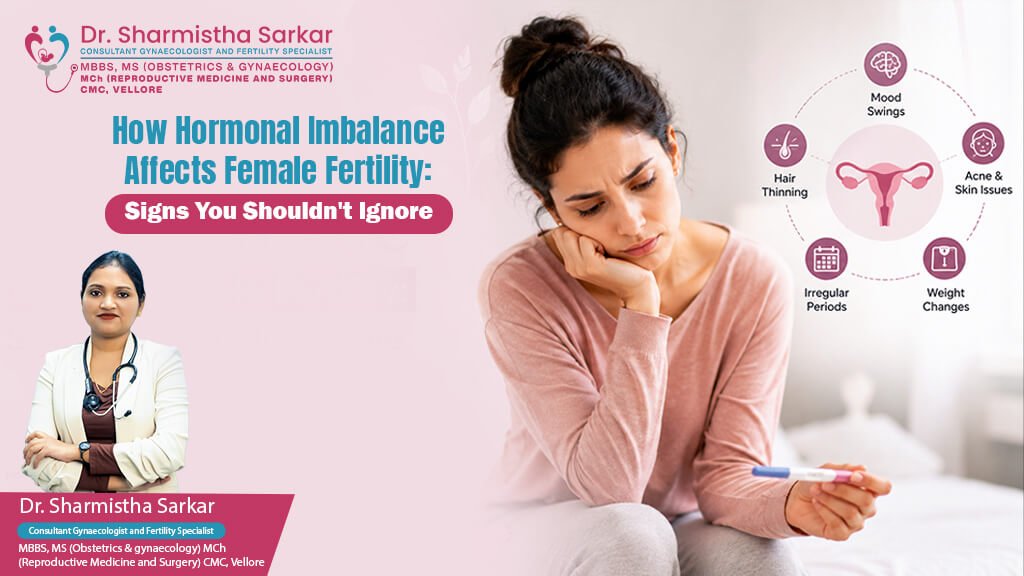
Let’s get specific. Here are signs of hormonal imbalance and fertility.
1. Missed or abnormal periods.
A normal cycle is 21-35 days. A shorter cycle, longer cycle, or an erratic cycle is a warning sign. This may indicate an ovulation issue.
2. Heavy or Very Light Bleeding
Both extremes matter. If you experience heavy bleeding, that can mean you’ve got estrogen excess. Any bleeding, even small amounts, can be a sign of low hormone levels.
3. Unexplained gain/loss of weight
Any rapid weight loss or gain is likely to be linked with thyroid and insulin resistance. Directly impacts both ovulation and type of birth.
4. Excess Facial or Body Hair:
High levels of androgens may be suggested by this.
Common in disorders such as PCOS, which is one of the leading causes of fertility problems.
5. Acne That Won’t Go Away
Acne in adulthood is frequently associated with hormonal changes and is particularly common in the area of the jawline.
6. Constant Fatigue
Any sensation that you feel tired and can’t get out of bed, despite resting, may indicate thyroid problems.
Ovulation and pregnancy are very dependent on thyroid health.
7. Mood swings and anxiety
Hormones also have an impact on brain chemistry.
Sudden changes of mood are not solely emotional. They’re often chemical.
8. Low Libido
Changes in sexual libido may indicate that there has been more of a hormonal shift.
9. Difficulty Conceiving
This is frequently the last symptom women see.
However, this imbalance has typically existed for months (or even years) by the time this occurs.
The Fertility Connection: You Can't Ignore
Let’s zoom out. Proper functioning of the female reproductive system is dependent on the fine-tuned balance of hormones.
Each month, a woman’s body gets ready for the possibility of a pregnancy. Egg release is controlled by hormones. They help to thicken the lining of the uterus. They monitor the entire process.
You don’t have to give up getting pregnant. It simply indicates that your body requires assistance in restoring balance to itself.
When Should You See a Doctor?
Avoid losing months or even years. If you’re experiencing two or more of these symptoms, consult a trusted fertility specialist in Siliguri for an early evaluation and personalized care.
Timely assessment is key to saving time. This also eliminates emotional tension.
One can run the appropriate tests, and a fertility specialist is in charge of them. Hormone panels. Ultrasounds. Thyroid function tests.
These tests provide information on what is actually going on within your body.
At this point, treatment is focused. Not guesswork.
How Hormonal Imbalance Is Treated
Treatment depends on the root cause. Some common approaches include:
Lifestyle changes – Better sleep. Balanced diet. Regular movement. These improve hormone regulation naturally.
Medication – Certain medicines help regulate ovulation and hormone levels.
Thyroid management – Simple daily medication often restores balance.
Weight management – Even a small weight change can restore ovulation in some cases.
Stress reduction – Chronic stress raises cortisol, which disrupts reproductive hormones.
Assisted reproductive support – In some cases, further fertility treatments help when natural conception becomes difficult.
The right plan depends on your specific hormone profile. This is why personalized evaluation matters so much.
Frequently Asked Questions (FAQs)
Q1. Can hormonal imbalance be reversed?
Q2. How long does it take to restore hormonal balance?
Q3. Does PCOS always cause infertility?
Q4. Should I get my hormones tested before trying to conceive?
Take the First Step Today
If you’re reading this and recognizing these signs in yourself, take a breath. You’re not broken. Your body isn’t failing you. It’s simply asking for support.
With the right diagnosis and care, many women restore their hormonal balance and go on to conceive successfully
Don’t let doubt derail your path to conception. Get an appointment with Dr. Sharmistha Sarkar today. Obtain a personalised treatment plan designed to meet your unique physiology
Contact us today. Your fertility story starts with one appointment.