If you’ve been attempting to conceive without any success, you might have to seek out help. You’re not alone. No one knows why, and many women suffer from this silently.
Hope is constantly replaced by frustration, every month. Test results are normal, but the pregnancy does not occur. Frequently, blocked fallopian tubes are overlooked.
There are relatively few symptoms of this condition. However, it is a significant factor in fertility problems in the world.
It is believed to be one of the main contributors to 20% of the cases of unexplained infertility in clinics today.
Let’s take this apart. Simply. Clearly. Without the jargon used by doctors.
What Are Fallopian Tubes and How Do They Work?
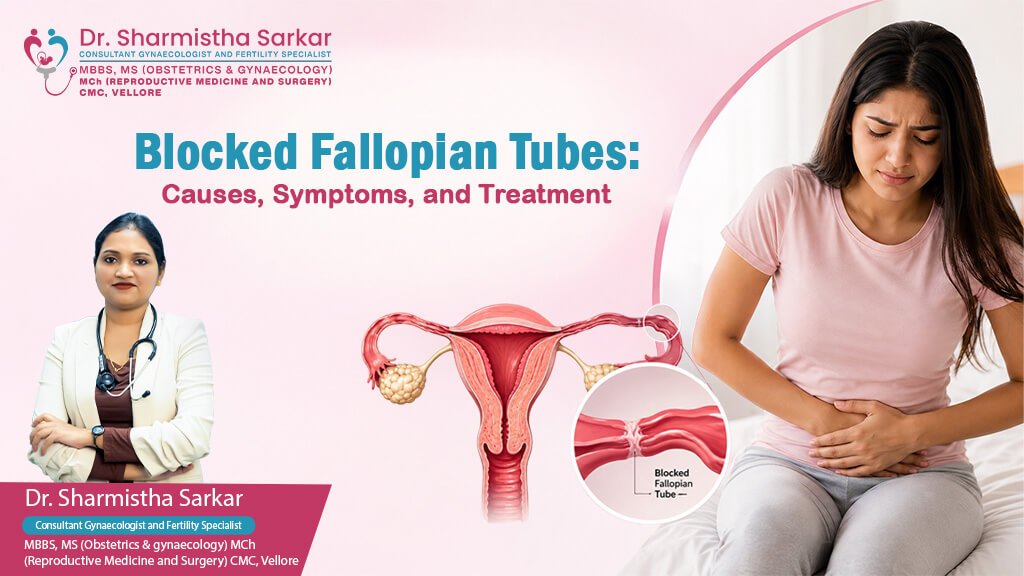
Consider these like miniature highways. Fallopian Tubes are tubes that link your ovary to your uterus.
This tube is used to transport an egg each month. Sperm and egg form a zygote, or fertilized egg, here. Now, just suppose that the highway is blocked.
The egg is unable to move. Sperm will not be able to make it there. As long as they cannot get them to breed.
So what is a tubal blockage? And it is more prevalent than most women think.
The blockage could occur anywhere on the tube. Near the ovary. In the middle. Or just at the point where it is attached to the uterus. The place is important as it will influence diagnosis and treatment options later.
Why Fallopian Tube Health Matters for Fertility
There are numerous factors that influence fertility.
Hormones. Ovulation. Uterine health. And importantly, open, functional tubes.
If there’s a blockage in the fallopian tube, even if the hormones are perfect, pregnancy may be impossible.
That’s why doctors always examine tube health when evaluating fertility. It’s a part of a puzzle that’s simple to overlook, but hard to overlook.
A large proportion of the female infertility cases that are encountered in the clinics today are due to blocked fallopian tubes.
Common Symptoms of Fallopian Tubes
Here’s the tricky part. Most women do not experience anything abnormal.
That’s right. Blocked fallopian tube symptoms can be vague, sometimes not present at all, which is why women may not find out they have a blocked fallopian tube until they are undergoing fertility testing.
However, some symptoms might occur such as:
- Slight to medium pain in the pelvis area.
- Unusual vaginal discharge
- Periods that are painful, worse than usual
- Pain during intercourse
The doctor will ask you about any previous infections you’ve had in the pelvis.
If you see these signs and complain of trouble getting pregnant, it’s advisable to get checked. Prevention is better than cure.
Take care – no symptoms, no problems! That’s why fertility testing is important – it can detect what the average person can’t.
What Causes for Blocked Fallopian Tubes?
The knowledge of the cause assists in providing appropriate treatment.
These are the most usual causes of blocked Fallopian tubes:
Pelvic Inflammatory Disease (PID) – May be due to untreated sexually transmitted infections such as chlamydia or gonorrhea. This is one of the main causes of damage to the tubes.
Endometriosis – Growth outside of the womb may be able to entangle or scar the tubes.
Previous surgeries – Surgery to the abdomen or pelvis may cause scar tissue to develop and obstruct the tubes.
Ectopic pregnancy history – Scars and damage to the affected tube can occur after an ectopic pregnancy.
Fibroids – If there is a large fibroid near the tubes, sometimes it can put pressure on the tubes and block them.
Untreated infections – If left untreated for too long, the risk of an infection of the pelvis is greatly increased.
Tuberculosis – Genital tuberculosis is an unrecognized but actual cause of tubal scarring in some areas.
If your doctor knows your past history, he or she can quickly identify the likely cause.
How Are Blocked Fallopian Tubes Diagnosed?
There are a few key tests that are typically used to diagnose.
Hysterosalpingography (HSG) – A special dye is inserted into the cervix. After this, X-rays will be taken to determine if the dye can flow freely through the tubes.
This procedure is still the most frequently used to diagnose fallopian tube blockage.
Laparoscopy – A minor surgical procedure using a small camera. This enables them to see blockages and other pelvic problems directly.
Sonohysterography – A test that uses ultrasound, which is sometimes used as the first screening test.
None of these tests are intended to frighten you. They just provide your doctor with a map of what’s going on inside, and guesswork is replaced by facts.
The correct test will be suggested according to your medical history and symptoms.
Blocked Fallopian Tubes and Infertility: What's the Connection?
Let’s address this directly.
Blocked tubes and infertility are closely linked, but a blockage doesn’t always mean pregnancy is impossible.
If only one tube is blocked, natural conception may still happen through the healthy tube.
If both tubes are blocked, natural conception becomes very difficult. But medical treatments still offer real hope.
This is why proper diagnosis matters so much. It tells you exactly what you’re working with, not just guessing based on symptoms alone.
Blocked Fallopian Tubes Treatment: Options That Work
Next, the part you’ve all been waiting for.
If you have blocked fallopian tubes treatment will vary depending on the location and severity of the blockage.
Tubal surgery – Sometimes, surgeons will be able to remove scar tissue and open the tube. The extent of the damage is the determining factor for success.
Laparoscopic surgery – A simple procedure that may be used for mild blockages or to remove scar tissue.
In Vitro Fertilisation (IVF) – IVF is used when tubes are so damaged or surgery unsuccessful. The egg and sperm fuse in the ‘outside’, and the embryo is deposited directly into the uterus.
In cases where both fallopian tubes are damaged, IVF is the best option that many women can have.
Other factors include age, ovarian reserve and health condition, which can also influence which one is the most suitable choice for you.
Treatment should always be customized to your individual needs. Not everything good for one woman will work for another.
When Should You Seek Expert Help?
Don’t wait too long before seeking help. After a year of failed attempts at pregnancy, it’s time to seek the advice of a fertility expert.
This time scale is reduced to half a year if you are over 35.
A specialist will be able to perform the appropriate tests, determine the exact cause, and recommend a treatment plan that is appropriate for you.
Consultations can help to find solutions quickly and effectively, especially at the beginning.
Can Blocked Fallopian Tubes Be Prevented?
Sometimes prevention is not an option, but at least risk reduction can be.
Treat pelvic infections quickly. Do not shrug off odd vaginal or pelvic pain or discharge.
Use safe sex to lower your risk of sexually transmitted infections (STIs), which can cause damage to the tubes.
Women also receive regular gynaecological examinations, which can detect problems early before they become more severe blockages.
Tell your doctor if you have any unusual symptoms in the pelvis after an infection or surgery has been performed. The little things can have a big impact and are important beyond what patients realize.
A Word of Encouragement
If you have just discovered this situation, take a breath. This isn’t the end of your fertility journey. It’s just a better place to begin.
There are actual and effective solutions from modern medicine. Many women experience this condition and can conceive successfully, naturally or via IVF.
All fertility journeys are different. You don’t need to follow anyone’s timeline or route.
You need clarity and not confusion. You deserve a plan tailored for your body!
The Emotional Aspects of Fertility Issues
Let’s not skip this part.
The task of a fertility diagnosis can be rather burdensome. The uncertainty around tests, medical terms, and unspecified timelines is also a mental strain.
It’s normal to be upset. Hopefulness and worry can co-exist.
Communicate with your partner openly. Consider joining a support group, or speaking with a counselor who specializes in fertility-related stress.
It’s not something you have to endure in silence. The entire process is lighter with support.
Frequently Asked Questions (FAQs)
Q1. Can blocked fallopian tubes be cured without surgery?
Q2. Is pregnancy possible with one blocked tube?
Q3. How long does recovery take after tubal surgery?
Q4. Does IVF work even with both tubes blocked?
Take the Next Step Today
Uncertainty is exhausting. Clarity changes everything.
Get accurate testing. Get a clear diagnosis. Get a treatment plan designed around your unique fertility story.
No two cases look exactly alike, and your care shouldn’t either.
Your journey toward parenthood deserves expert guidance, not guesswork. Reach out now and take the first confident step forward.
Book a consultation with Dr. Sharmistha Sarkar today.