Dr Sharmistha

Women’s Health

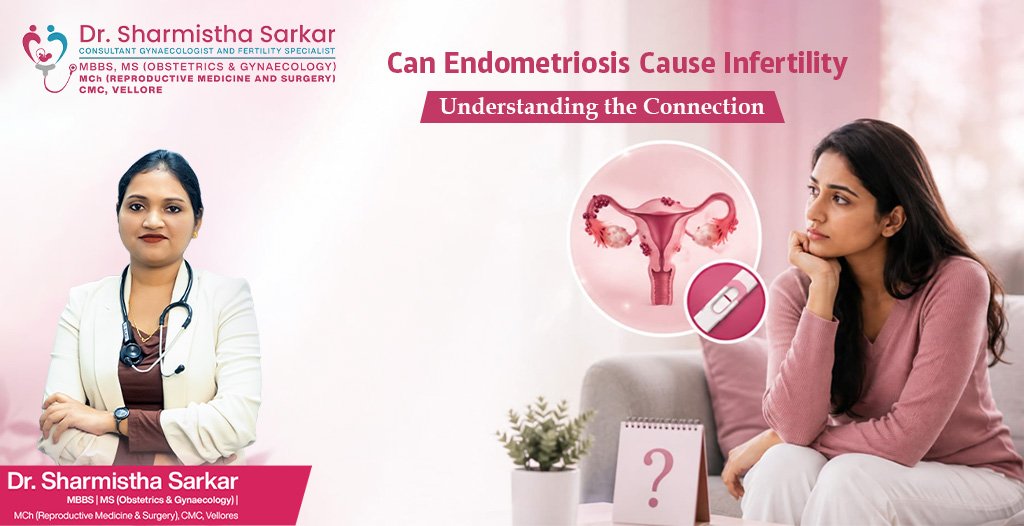
Can Endometriosis Cause Infertility? Understanding the Connection

Being diagnosed with endometriosis, or perhaps even suspecting that you may have it, will bring up a number of questions in your mind, but one in particular that will definitely be prominent is whether endometriosis causes infertility. This is a legitimate worry, as there are quite a few cases where women are facing this issue and don’t get the right information or help from anyone. But the thing is that endometriosis-induced infertility is not something unknown in medical circles, and, if you consult an expert fertility doctor, you will be able to become pregnant successfully.. What is Endometriosis? Endometriosis is an illness wherein tissues like that lining the uterus are found outside the uterus – most likely growing on the ovaries, fallopian tubes, and the lining tissues of the pelvis. But unlike the uterine lining tissue that sheds itself during the menstrual period, this tissue has nowhere to go once it is shed. Hence, it causes inflammation, scarring, and adhesions (scar tissues that make the organs bind to each other).   There are millions of sufferers of endometriosis all around the world, but many of them remain undiagnosed for several years as the symptoms are usually dismissed as just menstrual pains. Common Symptoms of Endometriosis Periods (dysmenorrhea) that cause severe pain that increases with time Sexual pain Pelvic pain that is not limited to periods Severe period bleeding or bleeding outside of periods Digestion problems like bloating, constipation, or diarrhea, particularly during your periods Fatigue Difficulty becoming pregnant These are some of the signs and symptoms that indicate you may need to see an infertility specialist. So, Can Endometriosis Cause Infertility? Absolutely, because endometriosis is one of the main reasons for women’s infertility. The researches show that there is a certain percentage of women who have trouble with conception, ranging from 30 to 50%. But it should be taken into account that not all women suffering from endometriosis will face the problem of infertility, because it does not necessarily depend on the severity of endometriosis. Let’s see how endometriosis can prevent conception. 1. Distorted Pelvic Anatomy With the growth of endometrium-like tissue and formation of scar tissue, the ovaries, fallopian tubes, and uterus may get displaced. This displacement of organs will make it hard for the egg cell to move from the ovary to the fallopian tube, thus preventing fertilization. 2. Blocked or Damaged Fallopian Tubes In the most severe case, endometriosis will lead to the development of adhesions which will block the fallopian tubes completely, thus preventing the sperm cell from getting to the egg or vice versa. 3. Inflammation Affecting Egg and Sperm Quality Endometriosis can cause chronic inflammation in the pelvic cavity. This inflammation might affect not only the egg and sperm cells but also the embryo itself. 4. Ovarian Reserve Reduction Chocolate cysts, which are also known as endometriomas, are one form of ovarian cysts related to endometriosis. Endometrioma can destroy normal ovarian tissue and decrease the woman’s ovarian reserve, meaning the amount of good quality eggs that can be used in conception. 5. Implantation Issues Although fertilization might happen, endometriosis can make the uterus not receptive enough for the implantation of the embryo. Diagnosing Endometriosis-Related Infertility In case you have been struggling with conception problems and think that you may have endometriosis, meeting an expert in infertility would be your initial move. The diagnostic procedure usually includes:   Detailed medical history and symptom review Pelvic examination Ultrasound imaging to detect cysts or abnormalities Laparoscopy, considered the gold standard for confirming endometriosis, which allows direct visualization and, in many cases, treatment during the same procedure Dr. Sharmistha Sarkar emphasizes the importance of early diagnosis, as timely intervention can significantly improve fertility outcomes for women with endometriosis. Treatment Options for Endometriosis and Infertility The correct treatment depends on the severity of the disorder, the woman’s age, and the duration of her efforts to get pregnant. The following treatment modalities are commonly used: Medication Treatment It helps to control pain and to slow down the progression of endometriosis; however, hormonal therapy is usually avoided while a woman is trying to conceive because most medications affect the ovulation process. Laparoscopy This minimally invasive procedure allows for the removal of endometrial tissue, cysts, and adhesions and increases fertility, especially if endometriosis is mild to moderate. Ovulation Induction Fertility drugs and controlled ovulation may assist in getting pregnant naturally in the case of mild endometriosis. Intrauterine Insemination (IUI) In some cases, intrauterine insemination is indicated along with ovulation induction. In Vitro Fertilization (IVF) If a woman has endometriosis to the extent that she has problems conceiving by other methods, In Vitro Fertilization (IVF) will be the most appropriate method for her. In vitro fertilization will avoid many of the issues that the condition causes in conception.   An experienced fertility specialist will design a personalized treatment program for each woman. Living with Endometriosis While Trying to Conceive However, having endometriosis does not automatically exclude a woman from pregnancy. There are many cases where women with this disease have successfully conceived both naturally and artificially. Here are some pieces of advice that might come in handy when attempting to conceive with endometriosis:   Do not waste time. Seek professional help immediately if you cannot conceive for six months to a year (or even before, if you are older than 35 years). Monitor your symptoms. Your doctor will need to know your experience of pain and the menstrual cycle in order to make the right diagnosis. Try every possible treatment. Whether it is lifestyle adjustment or complex assisted reproductive technologies, there are numerous ways to get pregnant. Look for psychological support. Dealing with fertility problems may be psychologically stressful, and discussing your issues with people who can listen is very important. Why Choose Dr. Sharmistha Sarkar Tackling infertility associated with endometriosis demands a sensitive, experienced, and meticulous method. Being an infertility specialist with extensive experience in dealing with women experiencing fertility problems, Dr. Sharmistha Sarkar is well equipped to provide personalized treatment

Can Endometriosis Cause Infertility? Understanding the Connection Read More »
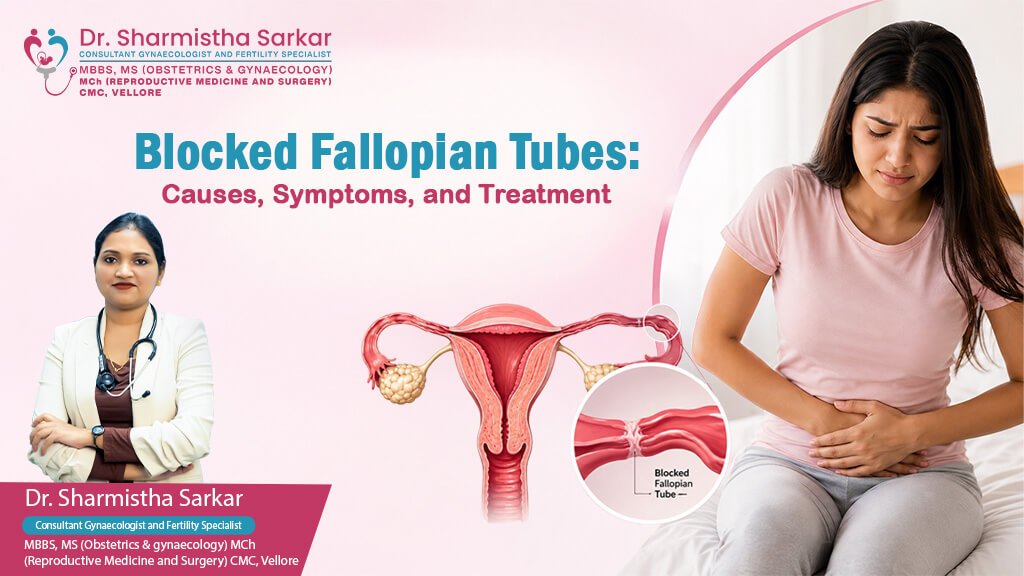
Blocked Fallopian Tubes: Causes, Symptoms, and Treatment

If you’ve been attempting to conceive without any success, you might have to seek out help. You’re not alone. No one knows why, and many women suffer from this silently. Hope is constantly replaced by frustration, every month. Test results are normal, but the pregnancy does not occur. Frequently, blocked fallopian tubes are overlooked.   There are relatively few symptoms of this condition. However, it is a significant factor in fertility problems in the world.   It is believed to be one of the main contributors to 20% of the cases of unexplained infertility in clinics today.   Let’s take this apart. Simply. Clearly. Without the jargon used by doctors. What Are Fallopian Tubes and How Do They Work? Consider these like miniature highways. Fallopian Tubes are tubes that link your ovary to your uterus.   This tube is used to transport an egg each month. Sperm and egg form a zygote, or fertilized egg, here. Now, just suppose that the highway is blocked.   The egg is unable to move. Sperm will not be able to make it there. As long as they cannot get them to breed.   So what is a tubal blockage? And it is more prevalent than most women think.   The blockage could occur anywhere on the tube. Near the ovary. In the middle. Or just at the point where it is attached to the uterus. The place is important as it will influence diagnosis and treatment options later. Why Fallopian Tube Health Matters for Fertility There are numerous factors that influence fertility.   Hormones. Ovulation. Uterine health. And importantly, open, functional tubes. If there’s a blockage in the fallopian tube, even if the hormones are perfect, pregnancy may be impossible.   That’s why doctors always examine tube health when evaluating fertility. It’s a part of a puzzle that’s simple to overlook, but hard to overlook.   A large proportion of the female infertility cases that are encountered in the clinics today are due to blocked fallopian tubes. Common Symptoms of Fallopian Tubes Here’s the tricky part. Most women do not experience anything abnormal.   That’s right. Blocked fallopian tube symptoms can be vague, sometimes not present at all, which is why women may not find out they have a blocked fallopian tube until they are undergoing fertility testing.   However, some symptoms might occur such as: Slight to medium pain in the pelvis area. Unusual vaginal discharge Periods that are painful, worse than usual Pain during intercourse The doctor will ask you about any previous infections you’ve had in the pelvis. If you see these signs and complain of trouble getting pregnant, it’s advisable to get checked. Prevention is better than cure.   Take care – no symptoms, no problems! That’s why fertility testing is important – it can detect what the average person can’t. What Causes for Blocked Fallopian Tubes? The knowledge of the cause assists in providing appropriate treatment.   These are the most usual causes of blocked Fallopian tubes:   Pelvic Inflammatory Disease (PID) – May be due to untreated sexually transmitted infections such as chlamydia or gonorrhea. This is one of the main causes of damage to the tubes.   Endometriosis – Growth outside of the womb may be able to entangle or scar the tubes.   Previous surgeries – Surgery to the abdomen or pelvis may cause scar tissue to develop and obstruct the tubes.   Ectopic pregnancy history – Scars and damage to the affected tube can occur after an ectopic pregnancy.   Fibroids – If there is a large fibroid near the tubes, sometimes it can put pressure on the tubes and block them.   Untreated infections – If left untreated for too long, the risk of an infection of the pelvis is greatly increased.   Tuberculosis – Genital tuberculosis is an unrecognized but actual cause of tubal scarring in some areas.   If your doctor knows your past history, he or she can quickly identify the likely cause. How Are Blocked Fallopian Tubes Diagnosed? There are a few key tests that are typically used to diagnose.   Hysterosalpingography (HSG) – A special dye is inserted into the cervix. After this, X-rays will be taken to determine if the dye can flow freely through the tubes. This procedure is still the most frequently used to diagnose fallopian tube blockage.   Laparoscopy – A minor surgical procedure using a small camera. This enables them to see blockages and other pelvic problems directly.   Sonohysterography – A test that uses ultrasound, which is sometimes used as the first screening test.   None of these tests are intended to frighten you. They just provide your doctor with a map of what’s going on inside, and guesswork is replaced by facts. The correct test will be suggested according to your medical history and symptoms. Blocked Fallopian Tubes and Infertility: What’s the Connection? Let’s address this directly.   Blocked tubes and infertility are closely linked, but a blockage doesn’t always mean pregnancy is impossible.   If only one tube is blocked, natural conception may still happen through the healthy tube.   If both tubes are blocked, natural conception becomes very difficult. But medical treatments still offer real hope.   This is why proper diagnosis matters so much. It tells you exactly what you’re working with, not just guessing based on symptoms alone. Blocked Fallopian Tubes Treatment: Options That Work Next, the part you’ve all been waiting for.   If you have blocked fallopian tubes treatment will vary depending on the location and severity of the blockage.   Tubal surgery – Sometimes, surgeons will be able to remove scar tissue and open the tube. The extent of the damage is the determining factor for success.   Laparoscopic surgery – A simple procedure that may be used for mild blockages or to remove scar tissue.   In Vitro Fertilisation (IVF) – IVF is used when tubes are so damaged or surgery unsuccessful. The egg and sperm fuse in the ‘outside’, and the

Blocked Fallopian Tubes: Causes, Symptoms, and Treatment Read More »

PGT in IVF: How Genetic Testing Can Improve Your Chances – Dr.Sharmistha

In the era of modern reproductive science, one of the most powerful advancements we have today is PGT in IVF. When you are on your IVF journey, this genetic test helps you choose the healthiest embryos for transfer.  Preimplantation Genetic Testing (PGT) is a method that is used in conjunction with IVF to select the healthiest embryos for transfer before implantation. This method helps to improve chances of pregnancy and reduce the high risk of miscarriage.  Types of PGT Testing: There are mainly three types of PGT Testing- PGT-A (Preimplantation Genetic Testing for Aneuploidy) PGT-M(Preimplantation Genetic Testing for Monogenic Disorders) PGT-SR(Preimplantation Genetic Testing for Structural Rearrangements) PGT-A (Preimplantation Genetic Testing for Aneuploidy): This is the most common type of genetic testing. It generally detects conditions where the number of chromosomes is abnormal such as Down Syndrome, where there is an extra chromosome 21, or Turner syndrome, where there is only one X chromosome present in a female’s body. PGT-M(Preimplantation Genetic Testing for Monogenic Disorders): In this genetic screening, the embryos that carry genes with any genetic disorder are detected and the healthiest embryos are selected for transfer. PGT-M is ideal for those couples who carry such conditions which can be passed on to their children. PGT-SR(Preimplantation Genetic Testing for Structural Rearrangements): Structural chromosomal abnormalities such as translocation or inventions often lead to higher chances of miscarriage or infertility. Embryos that carry these structural abnormalities are identified and the embryos that are more likely to result in a successful pregnancy are selected  by fertility specialists. Benefits of PGT in IVF: Higher success rates: Choosing chromosomally normal embryos increases the chances of successful implantation. Lower risk of miscarriage: Genetic issues are a common cause of pregnancy loss; detecting them early helps avoid heartbreak. More confident embryo selection: Instead of guessing, you get scientifically guided choices. Safer single-embryo transfer: With PGT-tested embryos, you can often transfer just one embryo with greater confidence.   Reduced risk of inherited disorders: PGT can identify specific genetic conditions that might run in a family.     PGT in IVF is especially recommended for: Women above 35 Couples with a history of recurrent pregnancy loss Parents who are carriers of known genetic conditions Couples with multiple failed IVF cycles Cases of severe male-factor infertility  If you aren’t sure whether you fall into these categories, don’t worry, personalized guidance is key, and that’s where Dr.Sharmistha’s expert consultation helps.    PGT in IVF (Preimplantation Genetic Testing) is more than just an advanced laboratory step, it’s a way to bring clarity, confidence, and hope into your fertility journey. By helping identify the healthiest embryos, PGT can improve IVF success rates, reduce the risk of miscarriage, and support safer, more informed decisions. While it may not guarantee pregnancy, it gives couples a better chance at achieving the healthy baby they dream of.   With expert guidance and the right fertility care, PGT can become a powerful part of your personalized IVF plan. If you’re considering IVF or exploring ways to enhance your chances, consult a fertility specialist like Dr. Sharmistha who can help you understand whether PGT is the right choice for you.     “Start your IVF journey with confidence Schedule your appointment with Dr. Sharmistha today!”

PGT in IVF: How Genetic Testing Can Improve Your Chances – Dr.Sharmistha Read More »