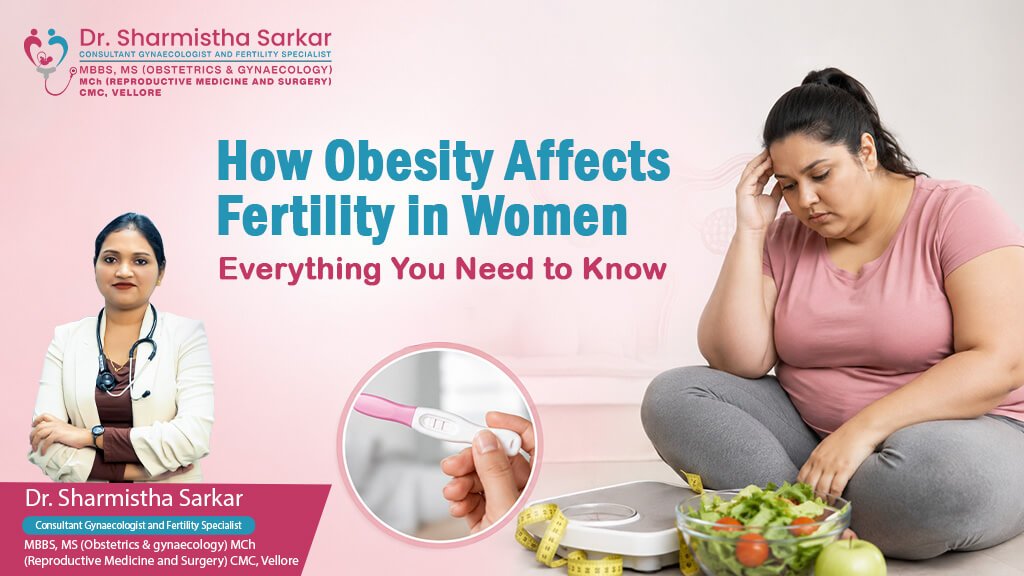
How Obesity Affects Fertility in Women: Everything You Need to Know
You’re eating right, mostly. You’re tracking your cycle down to the day. You’ve read every article the internet has to offer. And still, month after month, nothing. Sound familiar? Then there’s probably a piece of this puzzle nobody’s mentioned to you yet – not at the dinner table, and sometimes not even in the doctor’s office. Weight. Obesity and fertility in women are far more connected than most people ever get told, and once you see the link, a lot of confusing symptoms suddenly click into place. Let’s get one thing straight first. This isn’t about blame. It’s not about shame. It’s just biology, doing what biology always does. Fat tissue isn’t some passive layer just sitting there minding its own business. It’s actually working overtime – pumping out hormones, messing with your insulin, constantly chatting with your reproductive system whether you notice it or not. And when that conversation gets a little too loud, fertility is usually the one that pays for it. The Basic Connection Nobody Explains Well Think of fat tissue less like storage and more like an active organ. It produces estrogen. It releases leptin. It sends out inflammatory signals. In normal amounts, this is fine -even necessary. But when body fat climbs significantly, so does this hormone output, and things get noisy. That extra noise interferes with the very precise signals your brain sends to your ovaries every month. Instead of a clean, predictable cycle, you start seeing delays, skipped periods, or cycles that never quite build up to ovulation at all. This is really the heart of obesity and fertility in women -it’s not about a number on a scale. It’s about what that number is quietly doing to your internal hormone environment. How Ovulation Gets Thrown Off Track Ovulation is basically a hormone relay race. Estrogen, progesterone, LH, FSH -they all need to hand off to each other at exactly the right moment for an egg to mature and release. Extra fat tissue produces additional estrogen on top of what your ovaries are already making. Your brain sees this and essentially thinks, “hormones are already high enough, no need to trigger ovulation.” So it doesn’t. Cycles get longer. Some months, ovulation doesn’t happen at all. If you’ve noticed your periods getting unpredictable, this is often the first visible sign of obesity and female fertility issues -long before anyone starts actively trying to conceive. The Insulin Piece Most People Miss Here’s something that rarely comes up in casual conversation: obesity is closely tied to insulin resistance. Your cells stop responding to insulin the way they should, so your pancreas compensates by pumping out more of it. That excess insulin pushes your ovaries to produce more androgens -yes, the same hormones associated with male characteristics. This throws off follicle development and, again, disrupts ovulation. This is also a big reason obesity and PCOS show up together so often. And PCOS, on its own, is one of the most common causes of infertility today. The good news is that managing insulin -through food choices, movement, sometimes medication -tends to improve ovulation fairly reliably. Why Your Doctor Keeps Bringing Up BMI If your doctor keeps circling back to your BMI during fertility conversations, it’s not a throwaway comment. There’s real research behind it. BMI and fertility outcomes are linked pretty consistently across studies. Higher BMI tends to show up alongside: A longer stretch of time trying to conceive naturally Lower success rates with treatments like IUI and IVF A higher chance of miscarriage after conception More pregnancy complications down the line None of this means a higher BMI equals infertility -plenty of women with higher BMI conceive naturally and have completely healthy pregnancies. But statistically, the odds shift a bit, and it’s better to know that early than to find out the hard way. It Doesn’t Stop at the Positive Pregnancy Test Something that gets overlooked constantly: overweight and fertility struggles don’t end the moment you conceive. They can follow you right through the pregnancy. Higher body weight during pregnancy is linked to a higher chance of gestational diabetes, high blood pressure, needing a C-section, and complications during delivery. So the real question isn’t just “can I get pregnant.” It’s also “how smoothly will this pregnancy go once I am?” Does Weight Actually Affect Fertility Treatment Success? It does, and this surprises a lot of people. Women with higher BMI often see somewhat lower success rates with IVF and IUI. Part of this comes down to egg quality. Part of it comes down to how the body responds to fertility medications -sometimes needing higher doses to get the same effect. And part of it involves the uterine lining and how well an embryo can implant. Because of this, a lot of fertility clinics now build weight management directly into the treatment plan instead of treating it as a side note. A fertility specialist will often suggest addressing weight before diving into treatment cycles, simply because it tends to improve the odds. Here’s the Genuinely Good News This isn’t a life sentence. Research shows that losing even five to ten percent of body weight can meaningfully improve ovulation and rebalance hormones for a lot of women. That’s a realistic target -not a total life overhaul. Plenty of women see their cycles regulated again within a few months of steady, sustainable changes. This is exactly why doctors push back against crash diets and extreme restrictions. Those approaches often backfire, adding stress to the body that makes hormonal imbalances worse, not better. What Actually Helps You don’t need to overhaul everything overnight. Small, consistent habits tend to move the needle more than dramatic short-term changes. Eating balanced meals with enough protein, fiber, and healthy fats -instead of chasing the latest restrictive diet trend -matters more than most people expect. So does simply moving your body regularly; something as basic as a daily walk can improve insulin sensitivity
How Obesity Affects Fertility in Women: Everything You Need to Know Read More »