
Dr Sharmistha

blocked fallopian tubes

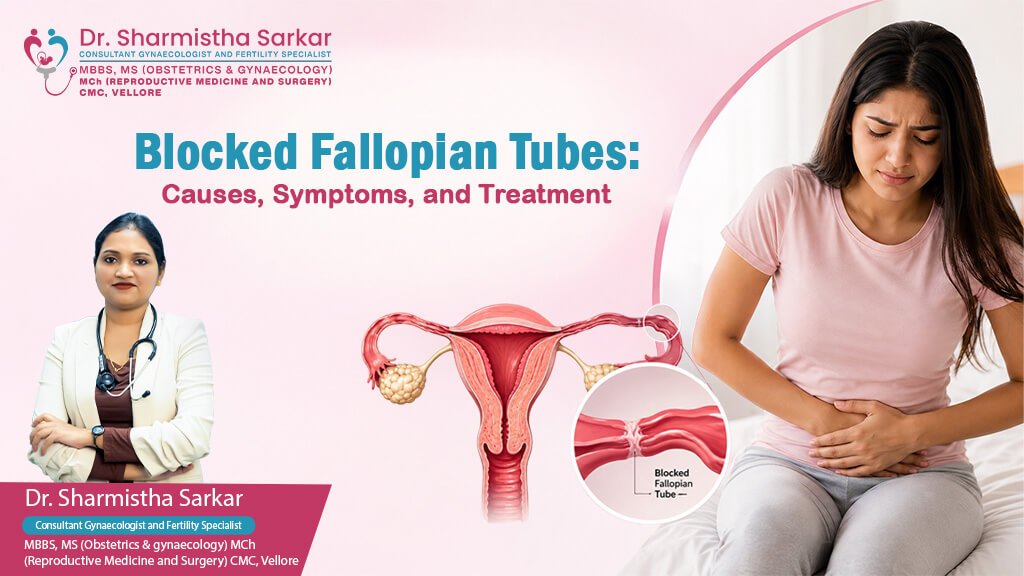
Blocked Fallopian Tubes: Causes, Symptoms, and Treatment

If you’ve been attempting to conceive without any success, you might have to seek out help. You’re not alone. No one knows why, and many women suffer from this silently. Hope is constantly replaced by frustration, every month. Test results are normal, but the pregnancy does not occur. Frequently, blocked fallopian tubes are overlooked.   There are relatively few symptoms of this condition. However, it is a significant factor in fertility problems in the world.   It is believed to be one of the main contributors to 20% of the cases of unexplained infertility in clinics today.   Let’s take this apart. Simply. Clearly. Without the jargon used by doctors. What Are Fallopian Tubes and How Do They Work? Consider these like miniature highways. Fallopian Tubes are tubes that link your ovary to your uterus.   This tube is used to transport an egg each month. Sperm and egg form a zygote, or fertilized egg, here. Now, just suppose that the highway is blocked.   The egg is unable to move. Sperm will not be able to make it there. As long as they cannot get them to breed.   So what is a tubal blockage? And it is more prevalent than most women think.   The blockage could occur anywhere on the tube. Near the ovary. In the middle. Or just at the point where it is attached to the uterus. The place is important as it will influence diagnosis and treatment options later. Why Fallopian Tube Health Matters for Fertility There are numerous factors that influence fertility.   Hormones. Ovulation. Uterine health. And importantly, open, functional tubes. If there’s a blockage in the fallopian tube, even if the hormones are perfect, pregnancy may be impossible.   That’s why doctors always examine tube health when evaluating fertility. It’s a part of a puzzle that’s simple to overlook, but hard to overlook.   A large proportion of the female infertility cases that are encountered in the clinics today are due to blocked fallopian tubes. Common Symptoms of Fallopian Tubes Here’s the tricky part. Most women do not experience anything abnormal.   That’s right. Blocked fallopian tube symptoms can be vague, sometimes not present at all, which is why women may not find out they have a blocked fallopian tube until they are undergoing fertility testing.   However, some symptoms might occur such as: Slight to medium pain in the pelvis area. Unusual vaginal discharge Periods that are painful, worse than usual Pain during intercourse The doctor will ask you about any previous infections you’ve had in the pelvis. If you see these signs and complain of trouble getting pregnant, it’s advisable to get checked. Prevention is better than cure.   Take care – no symptoms, no problems! That’s why fertility testing is important – it can detect what the average person can’t. What Causes for Blocked Fallopian Tubes? The knowledge of the cause assists in providing appropriate treatment.   These are the most usual causes of blocked Fallopian tubes:   Pelvic Inflammatory Disease (PID) – May be due to untreated sexually transmitted infections such as chlamydia or gonorrhea. This is one of the main causes of damage to the tubes.   Endometriosis – Growth outside of the womb may be able to entangle or scar the tubes.   Previous surgeries – Surgery to the abdomen or pelvis may cause scar tissue to develop and obstruct the tubes.   Ectopic pregnancy history – Scars and damage to the affected tube can occur after an ectopic pregnancy.   Fibroids – If there is a large fibroid near the tubes, sometimes it can put pressure on the tubes and block them.   Untreated infections – If left untreated for too long, the risk of an infection of the pelvis is greatly increased.   Tuberculosis – Genital tuberculosis is an unrecognized but actual cause of tubal scarring in some areas.   If your doctor knows your past history, he or she can quickly identify the likely cause. How Are Blocked Fallopian Tubes Diagnosed? There are a few key tests that are typically used to diagnose.   Hysterosalpingography (HSG) – A special dye is inserted into the cervix. After this, X-rays will be taken to determine if the dye can flow freely through the tubes. This procedure is still the most frequently used to diagnose fallopian tube blockage.   Laparoscopy – A minor surgical procedure using a small camera. This enables them to see blockages and other pelvic problems directly.   Sonohysterography – A test that uses ultrasound, which is sometimes used as the first screening test.   None of these tests are intended to frighten you. They just provide your doctor with a map of what’s going on inside, and guesswork is replaced by facts. The correct test will be suggested according to your medical history and symptoms. Blocked Fallopian Tubes and Infertility: What’s the Connection? Let’s address this directly.   Blocked tubes and infertility are closely linked, but a blockage doesn’t always mean pregnancy is impossible.   If only one tube is blocked, natural conception may still happen through the healthy tube.   If both tubes are blocked, natural conception becomes very difficult. But medical treatments still offer real hope.   This is why proper diagnosis matters so much. It tells you exactly what you’re working with, not just guessing based on symptoms alone. Blocked Fallopian Tubes Treatment: Options That Work Next, the part you’ve all been waiting for.   If you have blocked fallopian tubes treatment will vary depending on the location and severity of the blockage.   Tubal surgery – Sometimes, surgeons will be able to remove scar tissue and open the tube. The extent of the damage is the determining factor for success.   Laparoscopic surgery – A simple procedure that may be used for mild blockages or to remove scar tissue.   In Vitro Fertilisation (IVF) – IVF is used when tubes are so damaged or surgery unsuccessful. The egg and sperm fuse in the ‘outside’, and the

Blocked Fallopian Tubes: Causes, Symptoms, and Treatment Read More »

Why Am I Not Getting Pregnant? Advice from a Fertility Specialist in Siliguri

This is a very common question that many ask and you are not alone.  Many females are not getting pregnant even if everything looks perfect. Pregnancy is a combination of a lot of things to ensure a good outcome. It associates the process of the release of the egg, the good eggs and the sperm, the tubes, the opportune time, and the well-functioning of the uterus. If one cannot conceive they feel emotionally stressed. The rate of pregnancy varies among couples. Some become pregnant quickly, and some take longer. This makes them question the potential issues. A Fertility Specialist in Siliguri is a physician who has been trained in the diagnosis and treatment of pregnancy and reproductive issues. Dr. Sharmistha Sarkar is one of the renowned doctors who provides holistic care to patients facing problems with pregnancy. She knows the problems of males and females and refers the couples to the correct tests, treatments, and support. In case you have been attempting to conceive to no avail, a fertility specialist will assist you in knowing why and the solution available to you, the best possible. How Long Is It Normal to Wait? Healthy couples should not rush to conceive, as it is quite natural. In case of age below 35 years, attempt not more than 12 months. When you are 35 years or older, you can make it about 6 months. If this does not happen, always consult an infertility doctor. An infertility physician in Siliguri can do a proper examination. Popular Causes of Pregnancy Failure Pregnancy may not come readily due to various reasons. These causes will help you know how to take the right steps. Irregular Ovulation Ovulation refers to the process in which the ovary discharges an egg once in a month. This is the most noteworthy measure of pregnancy. When ovulation fails to occur regularly, the likelihood of pregnancy decreases significantly. The causes may be: PCOS (Polycystic Ovary Syndrome). Imbalance in the hormonal level Issues in thyroid Sudden weight changes Irregular periods are common nowadays. A Fertility Specialist in Siliguri will be able to track ovulation and administer drugs to normalize the cycle. Age Factor Age is quite critical in fertility, particularly for women. Fertility is highest in the 20s It starts falling after 30 After 35, it falls faster As age increases: Egg quality goes down Egg count goes down The risk of miscarriage is higher This is the reason why you should consult an IVF doctor in Siliguri early enough in case you want to conceive a pregnancy later. Blocked Fallopian Tubes Fallopian tubes refer to the place where the egg passes through the ovary to the uterus. This is normally the fertilization site. If the tubes are obstructed or broken: Sperm cannot reach the egg It is not possible to get pregnant naturally. Reasons for blockage: Infections Previous surgeries Endometriosis Pelvic inflammatory disease A fertility physician in Siliguri might recommend examinations to determine whether the tubes are patent. Male Fertility Issues The problem of fertility is not a female issue. In most instances, it is caused by male factors. Common male problems: Low sperm count Poor sperm movement Abnormal sperm shape Hormonal issues Such problems can be detected in a semen analysis test. According to findings, an IVF expert in Siliguri can offer appropriate therapies. Lifestyle Factors Lifestyle choices in modern society influence fertility in both men and women. Common factors include: Stress Smoking Alcohol Unhealthy diet Lack of exercise Obesity Unexplained Infertility At times, all the medical tests are normal, and yet no pregnancy occurs. This is referred to as unexplained infertility. In such cases: Ovulation timing is a factor It may not be a good interaction between egg and sperm. It can have minor problems that cannot be easily detected. The advanced treatment in Siliguri is assisted by an IVF doctor in Siliguri. Dr. Sharmistha’s Advices to Naturally Improve Your Chances Maintain a healthy weight Have food rich in nutrients Do exercise regularly Do not take much stress Quit smoking and alcohol Track the timing of ovulation These measures can aid medical care and enhance the outcomes. When should you refer to a fertility specialist? You need to see a Fertility Specialist in Siliguri in case: You have been trying long time with no effective result Your periods are irregular You are diagnosed with PCOS or thyroid problems. There have been several miscarriages in you. You are older than 35 years, and you intend to get pregnant. Consultation early will save time and increase the levels of success. Available Treatment Options There are various advanced treatment options suggested by IVF doctors. An IVF specialist in Siliguri can recommend: Medications: These assist in enhancing ovulation and hormonal normalcy. IUI (Intrauterine Insider):  is the process where the sperm is directly inserted inside the uterus to increase the level of fertility. IVF (In Vitro Fertilization): The egg and the sperm are then combined outside the body. The embryo is inserted into the uterus. Intracytoplasmic Sperm Injection (ICSI): Anthropophilic IVF where a single sperm is injected into the egg. Professional Treatment By Dr. Sharmishtha Sarkar The selection of a good specialist is highly necessary when you require assistance with fertility. Dr. Sharmishtha Sarkar– MBBS, MS, Mch (Fertility Specialist, obstetrician & gynecologist) who takes care of her patients very well and has expertise in advanced fertility treatments in Siliguri. She offers: Individualized patient care. Sophisticated diagnostic assistance. IVF, IUI, and ICSI procedures Caring and tender treatment. The experience and commitment she has are a reliable option for couples requiring fertility treatment in Siliguri. Examination Suggested by a Fertility Expert A fertility doctor in Siliguri may suggest finding the precise cause: Hormone blood tests Ultrasound scans Ovulation tracking Semen analysis Fallopian tube testing These examinations are useful in the planning of optimal treatment. Frequently Asked Questions (FAQs) Q1. Who is said to be a fertility specialist? A doctor who assists with pregnancy issues and helps the couple conceive is known as a fertility specialist. Q2. What

Why Am I Not Getting Pregnant? Advice from a Fertility Specialist in Siliguri Read More »