Genetic Testing

PCOD: Symptoms, Causes & Treatment Explained By Dr. Sharmistha Sarkar

It starts with a missed period.  Then, perhaps you notice acne that won’t go away, or weight gain that seems impossible to lose despite dieting. You might be told it’s “just stress,” but your body knows something is wrong. You are likely dealing with PCOD (Polycystic Ovarian Disease), a condition that affects nearly 1 in 5 Indian women.  While the diagnosis can feel overwhelming, PCOD is not a life sentence. It is a metabolic signal from your body asking for balance.As a gynecologist with years of experience treating hormonal disorders, I, Dr. Sharmistha Sarkar, want to cut through the noise and give you the medical facts. PCOD is manageable, treatable, and often reversible with the right guidance. Here is everything you need to know to take control of your health Why Does PCOD Happen? (The Causes) Patients often ask me, “Did I cause this?” The answer is complex.PCOD is usually a “perfect storm” of three factors: Genetics: If your mother or sister has PCOD, your risk increases by 50%. You inherit the tendency, but your lifestyle pulls the trigger. Insulin Resistance: This is the key villain. When your body’s cells stop responding to insulin, your pancreas pumps out more High insulin triggers the ovaries to produce excess testosterone, stopping ovulation. Sedentary Lifestyle: Lack of activity and a diet high in processed sugars exacerbate the hormonal imbalance.     The Treatment Roadmap: How We Manage PCOD At my clinic, I don’t believe in a “one-pill-fits-all” approach. Treating PCOD requires a 360-degree strategy combining medical intervention with lifestyle discipline. 1. Medical Management (The “Reset”) Hormonal Therapy: Oral contraceptive pills (OCPs) are sometimes prescribed to regulate cycles and lower androgen levels. Insulin Sensitizers: Drugs like Metformin may be used to improve how your body handles sugar, aiding in weight loss and ovulation. Anti-Androgens: Specific medications can reduce acne and facial hair growth 2. The Lifestyle “Prescription” (The Cure) Medicine manages symptoms; lifestyle heals the root. The 10% Rule: Losing just 5-10% of your body weight can restore normal ovulation in 75% of women. PCOD Diet: Switch to low-Glycemic Index (GI) foods. Avoid white bread, sugar, and processed snacks. Embrace complex carbs (oats, quinoa), lean proteins, and fiber. Exercise: You don’t need a gym. 30 minutes of brisk walking or yoga daily improves insulin sensitivity significantly. PCOD and Fertility: Can I Get Pregnant? This is the biggest fear my patients share. Let me reassure you: Yes, you can conceive with PCOD.While PCOD causes “Anovulation” (lack of egg release), it is one of the most treatable causes of infertility. Ovulation Induction: We use safe medications to stimulate the ovaries to release eggs. Cycle Monitoring: We track your follicle growth to time conception perfectly. For resistant cases, advanced options like IUI or IVF have high success rates for PCOD patients. Frequently Asked Questions (FAQs) 1. Is PCOD a serious condition? PCOD is not life-threatening, but it is a serious metabolic disorder. If left untreated, it can lead to long-term health risks like Diabetes, High Blood Pressure, and Uterine Cancer. However, with lifestyle management, it is highly controllable. 2. Is weight gain always associated with PCOD? No. While 80% of women with PCOD struggle with weight (Obese PCOD), there is a variant called “Lean PCOD” where women have normal weight but still suffer from hormonal imbalance, acne, and irregular periods. 3. At what age does PCOD usually start? PCOD often starts soon after puberty. We are seeing a rise in teenage PCOD, with girls as young as 13-14 presenting with irregular periods and hirsutism, often linked to childhood obesity and stress. 4. Can PCOD be cured permanently? PCOD is a chronic condition, meaning it cannot be “cured” like an infection. However, it can be reversed. With a healthy lifestyle, many women remain symptom-free for life without medication. Think of it as “remission” rather than a cure. 5. Does PCOD affect fertility? It is a leading cause of infertility because it stops regular ovulation. However, it is also highly treatable. Most women with PCOD conceive naturally or with minimal medical assistance, like ovulation induction. Conclusion: Take Charge of Your Body PCOD is your body’s way of asking for help. Ignoring it can lead to long-term issues like Type 2 Diabetes, hypertension, and endometrial complications.But facing it? That leads to a healthier, more energetic, and balanced you. You don’t have to navigate this hormonal maze alone. Whether you are a teenager dealing with acne or a woman planning a pregnancy, the right guidance changes everything. [Book Your Consultation with Dr. Sharmistha Sarkar Today]

PCOD: Symptoms, Causes & Treatment Explained By Dr. Sharmistha Sarkar Read More »

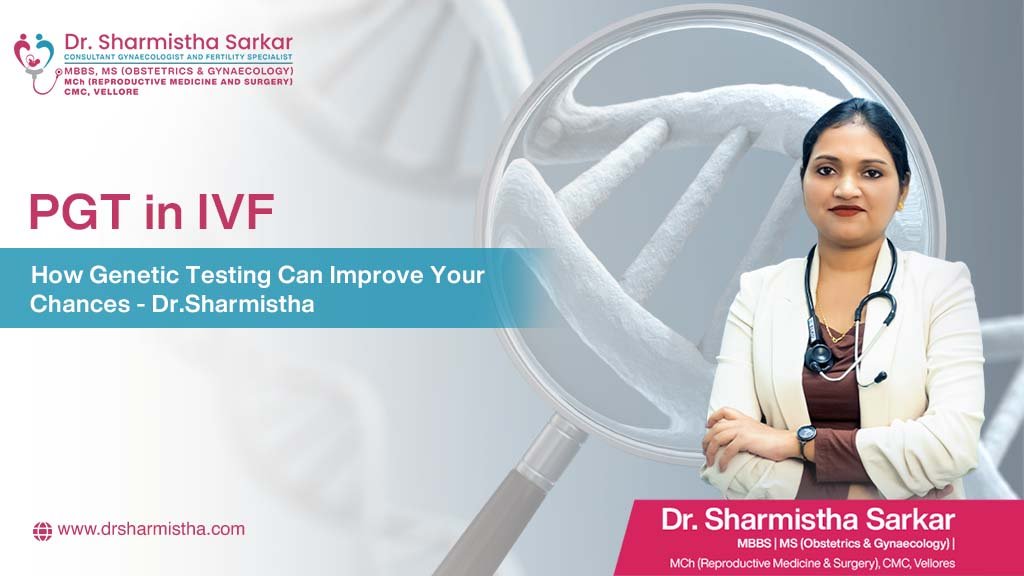
PGT in IVF: How Genetic Testing Can Improve Your Chances – Dr.Sharmistha

In the era of modern reproductive science, one of the most powerful advancements we have today is PGT in IVF. When you are on your IVF journey, this genetic test helps you choose the healthiest embryos for transfer.  Preimplantation Genetic Testing (PGT) is a method that is used in conjunction with IVF to select the healthiest embryos for transfer before implantation. This method helps to improve chances of pregnancy and reduce the high risk of miscarriage.  Types of PGT Testing: There are mainly three types of PGT Testing- PGT-A (Preimplantation Genetic Testing for Aneuploidy) PGT-M(Preimplantation Genetic Testing for Monogenic Disorders) PGT-SR(Preimplantation Genetic Testing for Structural Rearrangements) PGT-A (Preimplantation Genetic Testing for Aneuploidy): This is the most common type of genetic testing. It generally detects conditions where the number of chromosomes is abnormal such as Down Syndrome, where there is an extra chromosome 21, or Turner syndrome, where there is only one X chromosome present in a female’s body. PGT-M(Preimplantation Genetic Testing for Monogenic Disorders): In this genetic screening, the embryos that carry genes with any genetic disorder are detected and the healthiest embryos are selected for transfer. PGT-M is ideal for those couples who carry such conditions which can be passed on to their children. PGT-SR(Preimplantation Genetic Testing for Structural Rearrangements): Structural chromosomal abnormalities such as translocation or inventions often lead to higher chances of miscarriage or infertility. Embryos that carry these structural abnormalities are identified and the embryos that are more likely to result in a successful pregnancy are selected  by fertility specialists. Benefits of PGT in IVF: Higher success rates: Choosing chromosomally normal embryos increases the chances of successful implantation. Lower risk of miscarriage: Genetic issues are a common cause of pregnancy loss; detecting them early helps avoid heartbreak. More confident embryo selection: Instead of guessing, you get scientifically guided choices. Safer single-embryo transfer: With PGT-tested embryos, you can often transfer just one embryo with greater confidence.   Reduced risk of inherited disorders: PGT can identify specific genetic conditions that might run in a family.     PGT in IVF is especially recommended for: Women above 35 Couples with a history of recurrent pregnancy loss Parents who are carriers of known genetic conditions Couples with multiple failed IVF cycles Cases of severe male-factor infertility  If you aren’t sure whether you fall into these categories, don’t worry, personalized guidance is key, and that’s where Dr.Sharmistha’s expert consultation helps.    PGT in IVF (Preimplantation Genetic Testing) is more than just an advanced laboratory step, it’s a way to bring clarity, confidence, and hope into your fertility journey. By helping identify the healthiest embryos, PGT can improve IVF success rates, reduce the risk of miscarriage, and support safer, more informed decisions. While it may not guarantee pregnancy, it gives couples a better chance at achieving the healthy baby they dream of.   With expert guidance and the right fertility care, PGT can become a powerful part of your personalized IVF plan. If you’re considering IVF or exploring ways to enhance your chances, consult a fertility specialist like Dr. Sharmistha who can help you understand whether PGT is the right choice for you.     “Start your IVF journey with confidence Schedule your appointment with Dr. Sharmistha today!”

PGT in IVF: How Genetic Testing Can Improve Your Chances – Dr.Sharmistha Read More »