Dr Sharmistha

Egg freezing

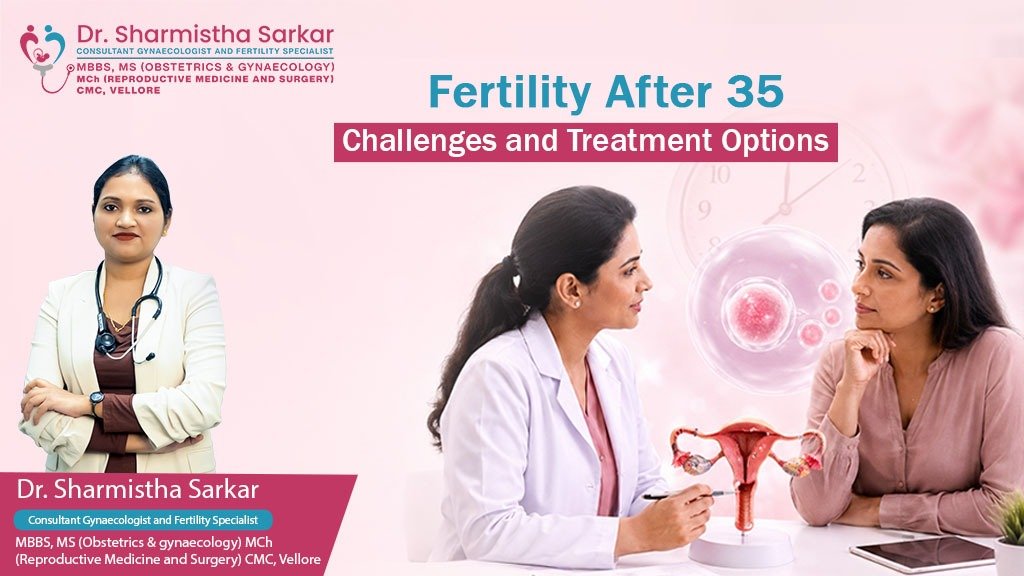
Fertility After 35: Challenges and Treatment Options

Numerous women enter a consultation room and tell their doctor some variation of, “I thought I had more time.” Typically, she is 36, maybe 38, or sometimes 41 – and has realized that having children at her age is not quite as easy as she had hoped.   This confusion is no mystery. The advice that women have received for many years is nebulous, telling women only that “fertility decreases with age.” It does not explain why or what the alternatives are after 35. So let’s discuss it. What Actually Changes After 35 Women are born with all the eggs they’ll ever have – roughly one to two million at birth, down to about 300,000 by puberty. From there, the number keeps dropping every single month, whether or not someone is trying to conceive. By the mid-30s, both the quantity and the quality of the remaining eggs have declined noticeably. This isn’t a guess or a scare tactic; it’s basic reproductive biology, and it’s the reason fertility specialists talk about 35 as a turning point rather than a magic cutoff.   Egg quality matters just as much as quantity. As eggs age, they become more prone to chromosomal abnormalities, which is part of why miscarriage rates climb after 35 and why conditions like Down syndrome become more common in pregnancies conceived at older maternal ages. None of this means pregnancy after 35 is unlikely – it isn’t – but the odds do shift, month by month, in a way they don’t in the late 20s.   There’s also the practical reality that fertility issues aren’t always about eggs alone. Conditions like fibroids, endometriosis, and hormonal imbalances become more common with age too, and they can complicate conception independently of egg quality. Why this Catches so Many Women off Guard So many women were doing everything “right” according to the advice that was given to them – they were focusing on their careers, saving enough money, and finding the right person. All of these things are not wrong. However, the problem with information about fertility timelines is that it is not delivered to women in an honest way, and by the time they start thinking about having children, they have lost years they didn’t realize could be so important.   This is not intended to make women feel guilty, as guilt doesn’t contribute to conception. Instead, this is to help people understand that knowing the biology of the process helps people approach treatment differently. When to See a Specialist It is generally advised that younger women under the age of 35 seek the expertise of a fertility specialist if conception does not occur within 12 months of trying. For women over the age of 35, the window is narrowed to six months. Women over the age of 40 are urged not to wait until then, and an initial consultation once ready for conception can serve to set the benchmark while there is still more time to work with.   These are indications that warrant early consultation, irrespective of age. Testing: What Actually Gets Checked Before jumping to treatment, real information is needed. For women, that typically includes an ovarian reserve assessment – usually AMH (anti-Müllerian hormone) bloodwork paired with an antral follicle count on ultrasound – along with hormone panels and imaging to check the uterus and fallopian tubes. For male partners, a semen analysis is standard, since roughly a third of fertility issues involve male factors and it’s often overlooked early on.   Testing isn’t about assigning blame. It’s about building an accurate map so treatment decisions aren’t a guessing game. Treatment Options After 35 There is no one-size-fits-all treatment plan. It all boils down to the results of your tests, the diagnosis, and what you personally feel comfortable with. Here is a practical example of what usually comes into the equation. Changes to your lifestyle are the very first step taken, not because they cure everything, but because they eliminate certain barriers that are in your hands to control. Losing extra pounds, stress management, less alcohol and cigarettes, treatment for thyroid disorders – all this can make a real difference, sometimes even sufficient in itself. Of course, this will not help you increase the egg reserve, but it is worth starting with. Ovulation induction and IUI (intrauterine insemination) are usually the first medical steps when the fallopian tubes are open and the partner’s sperm count is normal. Medication stimulates egg release, and sperm is placed directly into the uterus around ovulation. It’s less invasive and less expensive than IVF, though success rates drop more steeply with age than they do for younger patients, so this route isn’t usually recommended indefinitely if it isn’t working. In vitro fertilization (IVF) emerges as the more straightforward method for many women who are above 35 years of age, especially those whose ovarian reserve is depleted or if other techniques have not proved effective. Eggs are collected, fertilized in the laboratory, and then one or more embryos are implanted back into the womb. The chances of success for IVF fall with age, but are considerably better compared to those of natural conception at the same age, and that is precisely why it comes up early in the discussion. Preimplantation genetic testing (PGT) is an option that could be incorporated into an IVF treatment cycle to detect chromosomal abnormalities in embryos before their transfer. Although this technique does not enhance the quality of eggs, it may decrease the risk of miscarriage as the embryo which is most viable is selected. Donor eggs become a genuine, and often successful, option when a woman’s own egg reserve or quality has declined significantly. It isn’t the first choice most people imagine for themselves, and it deserves an honest conversation rather than being avoided. For many patients, donor egg IVF offers by far the highest success rates of any option available after 40. Egg freezing, ideally done earlier, is worth mentioning too, since women in their late 30s often

Fertility After 35: Challenges and Treatment Options Read More »

Everything You Need to Know About Egg Freezing

Everything You Need to Know About Egg Freezing

As women increasingly seek control over their reproductive timelines, egg freezing—also known as oocyte cryopreservation—has become a valuable option. This blog will provide a comprehensive understanding of the egg freezing process, its benefits, risks, and who might consider this option. Whether it’s to delay pregnancy for personal or career reasons, or as a precautionary measure for women facing medical treatments that may impact fertility, egg freezing offers the chance to preserve reproductive options for the future. Understanding Egg Freezing Egg freezing involves collecting and preserving a woman’s eggs at a younger age when they are generally healthier and more viable for fertilization. This can be an empowering choice, giving women more freedom in planning their futures. Let’s dive deeper into the stages of egg freezing and why it’s considered a significant milestone in reproductive health. The Process of Egg Freezing The egg freezing process consists of several distinct stages: 1. Consultation and Initial Testing ○ A fertility specialist first conducts a comprehensive consultation to assess the candidate’s reproductive health. This often includes tests for ovarian reserve (the number of remaining eggs), such as anti-Müllerian hormone (AMH) levels, as well as ultrasound evaluations. ○ Blood tests, including screenings for HIV, hepatitis, and other conditions, are also performed to ensure the patient’s safety and health before proceeding with the procedure.​ 2. Ovarian Stimulation ○ Hormonal injections are administered daily for about 10 to 14 days to stimulate the ovaries to produce multiple eggs. This phase requires close monitoring through blood tests and ultrasounds to track the growth of the ovarian follicles, which contain the eggs. ○ It’s important to follow the specialist’s instructions and attend regular check-ups, as overstimulation can lead to Ovarian Hyperstimulation Syndrome (OHSS) in rare cases. 3. Egg Retrieval ○ Once the eggs are mature, they are collected through a minor, minimally invasive procedure. Under light sedation, a specialist uses an ultrasound-guided needle to retrieve the eggs from the ovaries, which typically takes about 20-30 minutes. ○ Mild cramping or discomfort is common after the procedure, but recovery is generally quick. 4. Freezing (Vitrification) ○ The collected eggs are rapidly frozen using a technique called vitrification. This method prevents ice crystal formation, which could damage the eggs and reduces the risk of harm during storage. ○ Eggs are then stored in liquid nitrogen tanks at extremely low temperatures, effectively preserving them until the woman decides to use them for conception. 5. Storage ○ The frozen eggs are stored in specialized facilities, where they remain viable for many years. This provides flexibility and reassurance to women who may not yet be ready to start a family. Benefits of Egg Freezing The primary benefit of egg freezing is the preservation of fertility, but there are additional advantages as well: 1. Increased Chances of a Healthy Pregnancy Later ○ Freezing eggs at a younger age allows women to use healthier, higher-quality eggs later in life, which can increase the chances of a successful pregnancy even as natural fertility declines with age. 2. Freedom from the Biological Clock ○ Women can pursue educational, professional, and personal goals without the urgency imposed by the ticking biological clock, providing peace of mind. 3. Options for Medical Reasons ○ Egg freezing is especially important for women who may undergo treatments like chemotherapy or radiation, which can adversely affect fertility. By freezing eggs beforehand, they preserve their chance of conceiving after recovery. 4. Freedom from the Biological Clock ○ Advances in cryopreservation techniques have significantly improved the success rates of using frozen eggs, making it a reliable choice for women considering IVF (In Vitro Fertilization) in the future. Risks and Considerations As with any medical procedure, there are risks associated with egg freezing. It’s crucial to weigh these considerations carefully. 1. Ovarian Hyperstimulation Syndrome (OHSS)​ ○ While rare, OHSS can occur due to the hormone injections used during ovarian stimulation. Symptoms include abdominal discomfort, bloating, and nausea. Severe cases are uncommon and can usually be managed with medical support. 2. Surgical Risks ○ As with any procedure involving sedation, there are minimal risks of infection or bleeding. However, egg retrieval is considered a safe, low-risk procedure. 3. Emotional and Financial Impact ○ The decision to freeze eggs often requires careful financial planning, as the costs can be significant. Furthermore, the process can be emotionally taxing, especially if multiple cycles are needed to retrieve an optimal number of eggs. 4. Uncertain Outcomes ○ While egg freezing offers an increased chance of future pregnancy, it’s not a guaranteed outcome. Each woman’s reproductive journey is unique, and success rates vary depending on age, egg quality, and other factors. Who Should Consider Egg Freezing? Egg freezing isn’t for everyone, but it may be a worthwhile option for certain groups of women: 1. Women Pursuing Education or Careers ○ Many women prioritize their careers or other personal goals in their 20s and 30s and may not be ready to start a family during these years. 2. Women with Medical Conditions Affecting Fertility ○ For women facing cancer treatments, or those with a family history of premature menopause, egg freezing can act as a safeguard. 3. Women Over 35 Not Ready for Pregnancy ○ As fertility begins to decline around this age, women over 35 may consider egg freezing to increase their chances of having healthy eggs available when they’re ready. Seeking Expert Guidance If you’re considering egg freezing or want more information about fertility options, consult a qualified fertility specialist. Dr. Sharmistha Sarkar, an IVF & Fertility Specialist, patient-centered care to help women make the best decisions for their reproductive futures. With her expertise, you’ll gain personalized insights and support to navigate your fertility journey with confidence.   By shedding light on the egg freezing process, we aim to empower women to make informed decisions about their reproductive futures. The decision to freeze eggs is highly personal, and with the right resources, women can approach this choice with clarity and confidence. Whether for medical reasons, career aspirations, or personal goals, egg freezing offers a

Everything You Need to Know About Egg Freezing Read More »