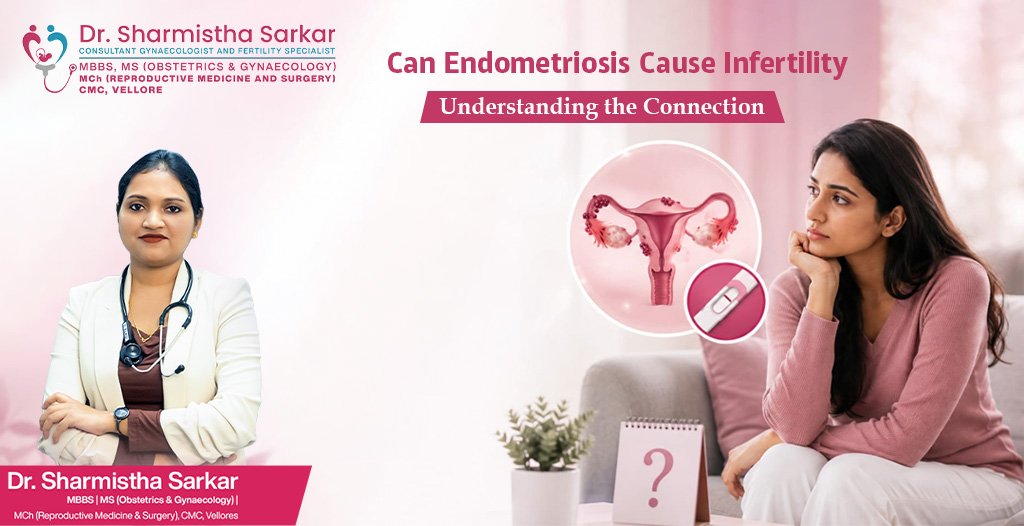
Can Endometriosis Cause Infertility? Understanding the Connection
Being diagnosed with endometriosis, or perhaps even suspecting that you may have it, will bring up a number of questions in your mind, but one in particular that will definitely be prominent is whether endometriosis causes infertility. This is a legitimate worry, as there are quite a few cases where women are facing this issue and don’t get the right information or help from anyone. But the thing is that endometriosis-induced infertility is not something unknown in medical circles, and, if you consult an expert fertility doctor, you will be able to become pregnant successfully.. What is Endometriosis? Endometriosis is an illness wherein tissues like that lining the uterus are found outside the uterus – most likely growing on the ovaries, fallopian tubes, and the lining tissues of the pelvis. But unlike the uterine lining tissue that sheds itself during the menstrual period, this tissue has nowhere to go once it is shed. Hence, it causes inflammation, scarring, and adhesions (scar tissues that make the organs bind to each other). There are millions of sufferers of endometriosis all around the world, but many of them remain undiagnosed for several years as the symptoms are usually dismissed as just menstrual pains. Common Symptoms of Endometriosis Periods (dysmenorrhea) that cause severe pain that increases with time Sexual pain Pelvic pain that is not limited to periods Severe period bleeding or bleeding outside of periods Digestion problems like bloating, constipation, or diarrhea, particularly during your periods Fatigue Difficulty becoming pregnant These are some of the signs and symptoms that indicate you may need to see an infertility specialist. So, Can Endometriosis Cause Infertility? Absolutely, because endometriosis is one of the main reasons for women’s infertility. The researches show that there is a certain percentage of women who have trouble with conception, ranging from 30 to 50%. But it should be taken into account that not all women suffering from endometriosis will face the problem of infertility, because it does not necessarily depend on the severity of endometriosis. Let’s see how endometriosis can prevent conception. 1. Distorted Pelvic Anatomy With the growth of endometrium-like tissue and formation of scar tissue, the ovaries, fallopian tubes, and uterus may get displaced. This displacement of organs will make it hard for the egg cell to move from the ovary to the fallopian tube, thus preventing fertilization. 2. Blocked or Damaged Fallopian Tubes In the most severe case, endometriosis will lead to the development of adhesions which will block the fallopian tubes completely, thus preventing the sperm cell from getting to the egg or vice versa. 3. Inflammation Affecting Egg and Sperm Quality Endometriosis can cause chronic inflammation in the pelvic cavity. This inflammation might affect not only the egg and sperm cells but also the embryo itself. 4. Ovarian Reserve Reduction Chocolate cysts, which are also known as endometriomas, are one form of ovarian cysts related to endometriosis. Endometrioma can destroy normal ovarian tissue and decrease the woman’s ovarian reserve, meaning the amount of good quality eggs that can be used in conception. 5. Implantation Issues Although fertilization might happen, endometriosis can make the uterus not receptive enough for the implantation of the embryo. Diagnosing Endometriosis-Related Infertility In case you have been struggling with conception problems and think that you may have endometriosis, meeting an expert in infertility would be your initial move. The diagnostic procedure usually includes: Detailed medical history and symptom review Pelvic examination Ultrasound imaging to detect cysts or abnormalities Laparoscopy, considered the gold standard for confirming endometriosis, which allows direct visualization and, in many cases, treatment during the same procedure Dr. Sharmistha Sarkar emphasizes the importance of early diagnosis, as timely intervention can significantly improve fertility outcomes for women with endometriosis. Treatment Options for Endometriosis and Infertility The correct treatment depends on the severity of the disorder, the woman’s age, and the duration of her efforts to get pregnant. The following treatment modalities are commonly used: Medication Treatment It helps to control pain and to slow down the progression of endometriosis; however, hormonal therapy is usually avoided while a woman is trying to conceive because most medications affect the ovulation process. Laparoscopy This minimally invasive procedure allows for the removal of endometrial tissue, cysts, and adhesions and increases fertility, especially if endometriosis is mild to moderate. Ovulation Induction Fertility drugs and controlled ovulation may assist in getting pregnant naturally in the case of mild endometriosis. Intrauterine Insemination (IUI) In some cases, intrauterine insemination is indicated along with ovulation induction. In Vitro Fertilization (IVF) If a woman has endometriosis to the extent that she has problems conceiving by other methods, In Vitro Fertilization (IVF) will be the most appropriate method for her. In vitro fertilization will avoid many of the issues that the condition causes in conception. An experienced fertility specialist will design a personalized treatment program for each woman. Living with Endometriosis While Trying to Conceive However, having endometriosis does not automatically exclude a woman from pregnancy. There are many cases where women with this disease have successfully conceived both naturally and artificially. Here are some pieces of advice that might come in handy when attempting to conceive with endometriosis: Do not waste time. Seek professional help immediately if you cannot conceive for six months to a year (or even before, if you are older than 35 years). Monitor your symptoms. Your doctor will need to know your experience of pain and the menstrual cycle in order to make the right diagnosis. Try every possible treatment. Whether it is lifestyle adjustment or complex assisted reproductive technologies, there are numerous ways to get pregnant. Look for psychological support. Dealing with fertility problems may be psychologically stressful, and discussing your issues with people who can listen is very important. Why Choose Dr. Sharmistha Sarkar Tackling infertility associated with endometriosis demands a sensitive, experienced, and meticulous method. Being an infertility specialist with extensive experience in dealing with women experiencing fertility problems, Dr. Sharmistha Sarkar is well equipped to provide personalized treatment
Can Endometriosis Cause Infertility? Understanding the Connection Read More »