Dr Sharmistha

Fertility Treatment

Azoospermia Treatment in Siliguri: What Are the Options for Zero Sperm Count?

A zero sperm count diagnosis can feel like the end of the road. In most cases, it is simply the beginning of a different one. The diagnosis of azoospermia -completely no sperm in the ejaculate of a man -is one of the most painful in the history of male roles towards parenthood. The silence that follows these words is oppressive. Immediately, floods of questions come through. Is it permanent? Is there any hope? Is it not possible any longer to have a biological child? Yes is the response of a good many men. Azoospermia, a condition that concerns 1 per cent of all men, occurs in 1 per cent of all men and accounts for 10 to 15 per cent of male infertility in the world. There is an increasing awareness in Siliguri and the rest of North Bengal – and, as far as treatment is concerned, an increase in the treatment options. The most critical and most important thing to do is learn what azoospermia is, its causes and what can be done regarding the same before making a well-informed choice as to the next course of action. What Is Azoospermia? Azoospermia is a male reproductive disorder in which the ejaculate of a man comprises no measurable sperm. It is confirmed by at least 2 different semen analyses done at different times. When the body does not produce sperm, the sperm may not be absent so it is a difference which makes everything different when it comes to treatment. Azoospermia has two major categories, and the selection of which treatment method depends on the type. Obstructive Azoospermia -Where Production is Normal In obstructive azoospermia, the testes are making sperm normally, but the obstruction somewhere in the reproductive tract does not allow the sperm to be found in the ejaculate. This obstruction may be in the epididymis, vas deferens or other ejaculatory ducts. Common causes include: Prior vasectomy Scarring caused by infection, such as chlamydia or gonorrhoea. Congenital lack of the vas deferens -a condition commonly linked to gene changes of the cystic fibrosis gene. Damage or trauma to the reproductive tract. Past surgeries involving the pelvic area or inguinal. Obstructive azoospermia usually has a better prognosis, as its own production of sperm is normal. Sperm may on other occasions, be directly collected out of the testis or epididymis and then subjected to IVF with ICSI -Intracytoplasmic Sperm Injection -to attain fertilisation. Non-Obstructive Azoospermia -When Is It the Production? Non-Obstructive Azoospermia becomes more complicated. In this case, it is the production of sperm -they are producing the smallest amount of sperm or none at all. This is also known as the testicular failure treatment territory, in that the challenge lies at the level of the testis and not the plumbing. Common causes include: Pituitary-testicular axis hormonal disorders. A genetic disorder like Klinefelter syndrome or a microdeletion of the Y chromosome Cryptorchidism -undescended testes in childhood. Chemotherapy or radiation. Varicocele -swollen veins in the scrotum that increase the temperature of the testicles. Some drugs or long-term exposure to heat and toxins. Non-obstructive azoospermia needs a more comprehensive investigation prior to treatment since the cause of this condition directly affects the possibility of sperm retrieval. Zero Sperm Count Treatment Options Available in Siliguri The good news is that a diagnosis of zero sperm count does not automatically mean biological parenthood is impossible. Several evidence-based treatment pathways exist, and the right option depends on the type and cause of azoospermia identified through proper investigation.   Hormonal Treatment: In cases where azoospermia is caused by a hormonal deficiency -particularly low FSH, LH, or testosterone -medical management with hormone therapy can stimulate sperm production. This is one of the most treatable forms of sperm production problems and can, in some patients, restore sperm to the ejaculate entirely.   Surgical Sperm Retrieval: For men where sperm cannot appear naturally in the ejaculate -whether due to obstruction or severely impaired production -sperm can be retrieved directly from the reproductive organs through minimally invasive procedures: PESA (Percutaneous Epididymal Sperm Aspiration) -sperm retrieved from the epididymis using a fine needle TESA (Testicular Sperm Aspiration) -sperm aspirated directly from the testicular tissue TESE (Testicular Sperm Extraction) -a small biopsy of testicular tissue is taken to locate and extract sperm Micro-TESE -a microsurgical technique used in non-obstructive cases, identifying pockets of sperm production within the testis under magnification Retrieved sperm is then used with IVF and ICSI to fertilise eggs in the laboratory -giving couples a genuine path to biological parenthood even in complex cases.   Varicocele Repair: In men where a varicocele is contributing to impaired sperm production, surgical repair -varicocelectomy -can improve testicular function and, in some cases, restore detectable sperm to the ejaculate over time.   Addressing Reversible Causes: Lifestyle factors, medications, and environmental exposures are assessed and addressed as part of any comprehensive male infertility azoospermia treatment plan. Stopping certain medications, reducing heat exposure, and managing underlying health conditions can all positively influence outcomes. The Investigations That Come First Before any treatment for azoospermia begins, a thorough diagnostic workup is essential. This typically includes: Repeat semen analysis to confirm the diagnosis Hormonal profile -FSH, LH, testosterone, prolactin Scrotal and transrectal ultrasound to identify structural causes Genetic testing -karyotype analysis and Y chromosome microdeletion screening Testicular biopsy in selected cases to assess sperm production at the tissue level Getting the diagnosis right is not a delay -it is the foundation of effective treatment. Treating azoospermia without understanding its cause is like navigating without a map. Why Choose Dr. Sharmistha for Azoospermia Treatment in Siliguri? For men and couples in Siliguri and across North Bengal seeking expert care for zero sperm count treatment, Dr. Sharmistha Sarkar, the best fertility specialist in Siliguri, offers something that is genuinely rare in this region -a combination of advanced reproductive medicine expertise, compassionate patient care, and a deeply personalised approach to male infertility treatment.   Here is what sets Dr. Sharmistha apart: Specialist expertise in male infertility -Dr. Sharmistha brings focused experience

Azoospermia Treatment in Siliguri: What Are the Options for Zero Sperm Count? Read More »

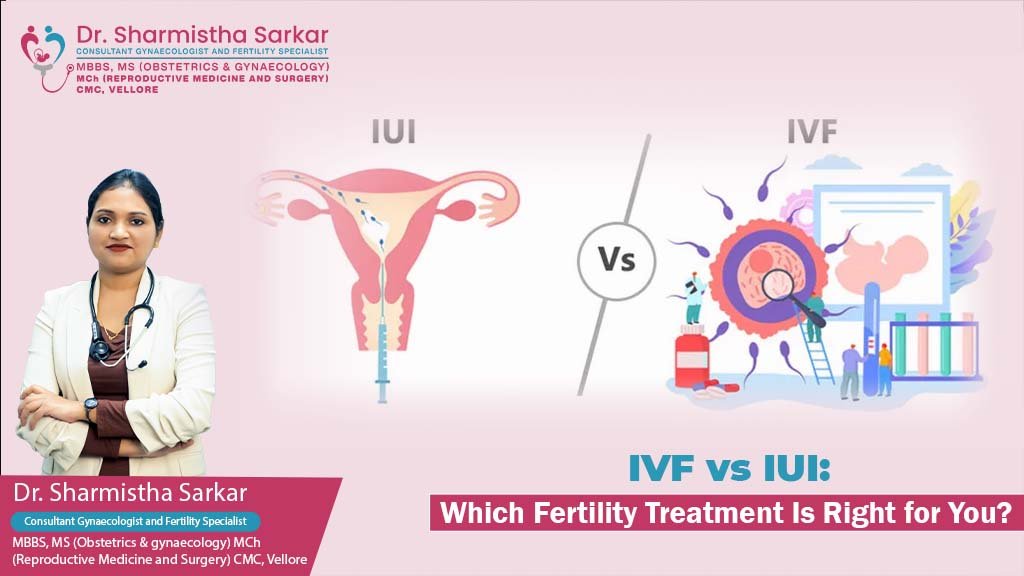
IVF vs IUI: Which Fertility Treatment Is Right for You?

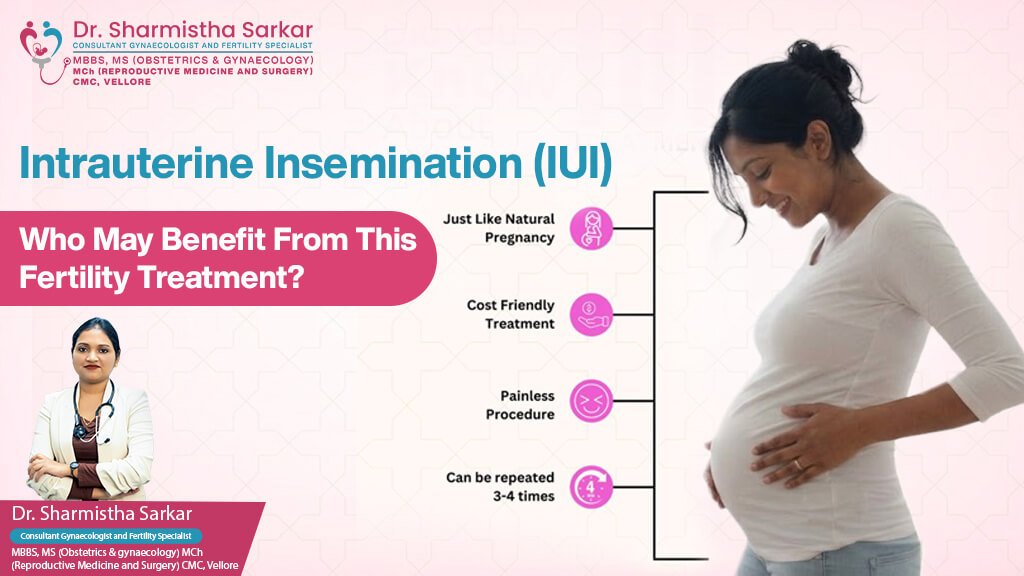
The journey to parenthood looks different for everyone — and so does the path that gets you there. When a couple decides to seek help conceiving, the first appointment with a fertility doctor can feel like walking into a foreign country. The words are not familiar, and the feelings are crude, and suddenly we are told about two abbreviations, IUI and IVF, as if they were common words we use. They have not. And they are very seldom elucidated as ought to be. They may be only starting to consider fertility options, or in the middle of the journey and realising that every choice is wrong, but this guide presents a transparent, non-judgmental, and actually practical explanation of IUI vs IVF, what they are, how they work, who they are suitable for, and how to consider which is better than the other. You need to consult a fertility specialist to know about your problem and proceed further with the latest medical treatment. What is IUI, and How does it Work? One of the simplest procedures of assisted reproductive therapies today is Intrauterine Insemination -IUI -. In a natural conception cycle, the sperm have to pass through the cervix and the fallopian tubes so as to find an egg and fertilise it. So much can go awry in that journey. IUI makes it much shorter. A sperm sample is obtained, which in this instance is processed in a laboratory where it is concentrated into the healthiest and motile sperm, and it is then inserted directly into the uterus via a thin and flexible catheter on or around the time. Fertilisation always occurs naturally, within the body. IUI only provides sperm with a big head start. The process lasts approximately 10-15 minutes. The majority of women report it to be slightly uncomfortable at its best, which is the likes of a regular check-up by a gynaecologist. No sedation, no surgery and no hospital stay is needed. There are cases where a mild course of oral medication or low-dose injections of hormones will be added to IUI to stimulate the ovaries and make sure that the ovulation is performed at the appropriate timing. What is IVF and how does it work? IVF (In Vitro Fertilisation)takes the fertilisation process completely out of the body, especially to the most crucial stage of it. The general procedure of an In Vitro Fertilisation cycle looks like this: Ovarian stimulation -Injectable hormones are administered for about 10 to 14 days to stimulate the ovaries to form more than one egg; instead of the one released during a natural cycle. This is kept track of by blood tests and an ultrasound scan. Egg retrieval -After the eggs have matured, they are collected using a minor surgical procedure that is done under light sedation. It is approximately 20-30 minutes. In vitro fertilisation –The eggs are collected and fertilised in vitro with sperm. A valiant effort is to try to treat severe male infertility by applying a procedure known as ICSI -Intracytoplasmic Sperm Injection – in which one sperm is microinjected directly into each egg to increase the likelihood of fertilisation. Embryo development-The fertilised eggs are observed as they mature into embryos and a period of three to five days. The quality of their laboratories is evaluated by the laboratory specialists during this time. Embryo transfer -A single or more healthy embryos are implanted into the uterus through a thin catheter. Any of the possible embryos may be frozen to be used in the future. Two week wait-A blood pregnancy test is conducted 10-14 days after transfer. IVF is more physically strenuous, more emotionally charged and more costly than IUI. It is also much more efficient for the right patients. IUI and IVF Are Not Alternatives -They Are Different Treatment One of the most common misconceptions in fertility treatment is that IUI and IVF sit on a simple ladder -IUI being the easy first step and IVF being the heavy-hitting last resort. This framing is not just inaccurate. It is genuinely harmful to patients trying to make informed decisions. The reality is more nuanced. IUI( Intrauterine insemination) assists the natural process. It does not replace it. For IUI to work, the fallopian tubes must be open and functional. Ovulation must occur, and sperm quality must be at least moderate. When those conditions are met, IUI is an effective process and evidence-based starting point. IVF(In vitro Fertilisation) bypasses the fallopian tubes completely. It allows specialists to select the healthiest embryos. It provides clinical information that no other treatment can offer. It is more invasive, more costly, and more emotionally demanding. The decision between them is not about bravery or giving up. It is about matching the right treatment to the right diagnosis. The Emotional Reality Both treatments demand something of you emotionally. The hormonal shifts, the two-week wait, the hope, the uncertainty -these are not side effects. They are part of the experience, and they are real. IVF, with its more intensive cycle, can feel physically and emotionally exhausting in a way that catches many couples off guard. IUI, though simpler, carries its own quiet heartache when cycles do not succeed. Whatever path you take, emotional support -whether through counselling, honest conversations with your partner, or a community of people who understand -matters as much as the medical protocol itself. Understanding Success Rates -What the Numbers Actually Mean All fertility centres publish success rates. Every patient studies them. And almost every patient misinterprets them. The truth is that these numbers mean very little without context -because success in fertility treatment is not determined by a clinic’s headline figure or the protocol a specialist prefers. It is determined, above all else, by age -and more precisely, by ovarian age, which does not always match the number on a birthday. IUI Success Rates -Key Facts: Average success rate per cycle ranges between 10% and 20% The rate varies based on age, diagnosis, and whether ovarian stimulation was used For women under 35 with

IVF vs IUI: Which Fertility Treatment Is Right for You? Read More »

Best Age for Social Egg Freezing: When Is the Right Time and Why It Matters Most

Your career is taking off. You’re building something real. A relationship, a business, a life on your own terms. But somewhere in the back of your mind, a quiet question sits: What about having children -someday? That’s exactly where social egg freezing enters the picture. Not because you’ve given up on the idea of a family. But because you’re smart enough to plan. Here’s the thing, though -timing isn’t just important with social egg freezing. Timing is everything. What Is Social Egg Freezing? Social egg freezing, also known as elective oocyte cryopreservation, involves retrieval and freezing of your eggs at this time and then using them when you choose to. This is NOT a medical requirement. It’s a choice. A proactive and empowering choice thousands of women are making every year. The eggs are removed through a brief hormonal stimulation process, and then frozen using a cutting-edge technique called vitrification (ultra-rapid cooling to -196°C). The eggs are then thawed, fertilised and transferred when it’s time to have a family! It’s about fertility at your own time. And it works when it’s executed at the proper age. Why Age Is an Important Factor for Social Egg Freezing? Here’s the biology, made simple. You’re born with all the eggs you’ll ever have. From puberty onward, that supply starts declining -slowly at first, then faster with every passing year. Not just in number. In quality too. Younger eggs are healthier eggs. They have stronger chromosomes, better fertilisation rates, and higher chances of leading to a healthy pregnancy. That’s the science. That’s the truth. And it’s the single biggest reason why the age at which you freeze your eggs matters more than almost anything else. The Sweet Spot: Your Late 20s to Early 30s Fertility specialists generally agree -the ideal window for social egg freezing is between the ages of 27 and 34. Here’s why this range hits the sweet spot: In your late 20s (27-29): Egg quality is at its peak. Egg quantity is strong. The stimulation process tends to retrieve more eggs per cycle. Fewer cycles are usually needed. And the eggs you freeze carry the highest likelihood of resulting in a live birth later. The downside? You’re younger. You may feel less certain about your plans. And the cost can feel steep when motherhood still feels abstract. In your early to mid-30s (30-34): This is the most popular window – and for good reason. Most women in this range are professionally established, emotionally clearer about their future, and still early enough to freeze high-quality eggs. Egg quality remains strong through the early 30s, though it does begin its gradual decline. Freezing before 35 gives you the best balance of biological advantage and life readiness. This is the golden zone. Don’t sleep on it. What Happens If You Wait Until Your Mid to Late 30s? Life happens. Plans change. Not everyone gets to the clinic at 29. If you’re in your mid to late 30s (35-38), social egg freezing is still absolutely worth considering. It’s not too late. But the numbers do shift. Egg quality declines more noticeably after 35. You may need more stimulation cycles to retrieve a sufficient number of mature eggs. Success rates per egg frozen begin to drop. And the emotional and financial investment increases. That said – freezing at 36 or 37 is still significantly better than not freezing at all. Studies show that women who froze eggs at under 38 had around a 70% chance of a live birth when more than 20 mature eggs were preserved. Hope is real. But earlier is always better. After 38, the picture changes more sharply. Egg reserve and quality both decline at an accelerated pace. Many clinics will still offer the procedure, but outcomes are less predictable. An honest conversation with your fertility specialist becomes even more important. Freezing in Your 20s – Is It Too Early? Here’s the question nobody talks about enough. Medically, freezing in your early-to-mid 20s (22-26) gives you the absolute best egg quality. Biology doesn’t lie. But statistically, most women who freeze this early end up not using their eggs at all -because they go on to conceive naturally before they need them. That doesn’t mean it’s wrong. If you have a strong reason to freeze early – family history of early menopause, a medical condition, a deep personal certainty about delaying motherhood -doing it in your mid-20s is a valid and medically sound decision. But for most women without specific risk factors, specialists suggest there’s no urgent medical reason to freeze before 27. Waiting a few years to reach the sweet spot doesn’t cost you much -biologically or emotionally. Know your body. Know your situation. And talk to a specialist. How Many Eggs Do You Need? This is the number people don’t always ask -but should. Most fertility experts recommend freezing 15 to 20 mature eggs to have a reasonable chance of one successful live birth. Some women reach that number in a single retrieval cycle. Others may need two. The younger you are, the more eggs are typically retrieved per cycle. That’s another reason why starting in your late 20s or early 30s is such a practical advantage -you’re more likely to hit your target in fewer cycles, with less cost and less time. Signs It’s Time to Have the Conversation Not sure if now is the right time? Here are a few honest indicators: You’re between 28 and 34 and not planning a pregnancy in the next 1-3 years You haven’t met the right partner yet – and that’s okay Your career or life circumstances need a few more years to settle There’s a family history of early menopause or premature ovarian insufficiency You simply want the reassurance of having options You don’t need a dramatic reason. Wanting the choice is reason enough. What the Process Actually Looks Like Let’s be honest -it’s not completely effortless. But it’s more manageable than most people expect. Step 1 –Initial Consultation & Testing:

Best Age for Social Egg Freezing: When Is the Right Time and Why It Matters Most Read More »

Recurrent IVF Failure: Causes Explained & Advanced Treatment – Dr. Sharmistha Sarkar

IVF is a hope for many couples who find it hard to conceive naturally. Nonetheless, prolonged failure of the cycles may be emotionally and physically draining. In case you have already had several failures, it is possible to seek the advice of an IVF specialist who will be able to evaluate the initial cause of the problem and point you to the correct path. What is Recurrent IVF Failure? Recurrent IVF failure is said to be the inability to get pregnant when one or two IVF cycles fail with good-quality embryos. It is a complicated question. It is required to be evaluated by an experienced IVF doctor. Every case is individual, and the insight into the causative agent is the clue to the higher success rates. Most Frequent Causes of Recurrent IVF Failure Various reasons can cause recurrent IVF Failure. You need to know: 1. Poor Embryo Quality The quality of embryos is a significant aspect of IVF. Genetically abnormal embryos can fail to implant or develop even after fertilization takes place. A skilled doctor may suggest the use of more sophisticated methods to determine the well-being of embryos. 2. Implantation Failure Even healthy embryos, in some cases, are not bound to the uterus. It happens sometimes due to complications during the uterine lining or embryo transfer. To address this issue, you need to consult with an IVF physician. 3. Uterine Abnormalities The presence of fibroids, polyps, or scar tissue in the uterus can interfere with implantation. These complications may be commonly diagnosed and remedied before the second round of IVF. 4. Hormonal Imbalances Hormones are also the key to the body’s readiness to get pregnant. The imbalances of progesterone, estrogen or thyroid hormones can affect embryo growth and implantation. 5. Age Factor One of the most significant factors in IVF success is female age. The older a woman is, the worse her egg quality and quantity become, and this may result in recurrent IVF failures. You can increase your chances by consulting an IVF specialist in Siliguri early. 6. Genetic Issues The two partners might be carrying some genetic deformities that influence the development of embryos. Such issues can be diagnosed with the help of sophisticated tests and treated properly. 7. Male Factor Infertility IVF failure may also be caused by issues such as low-quality sperm or DNA fragmentation. Both partners are carefully evaluated by a qualified fertility specialist to ensure an accurate and comprehensive diagnosis. Advanced IVF Treatment Couples who experience recurrent IVF failure have several solutions available to them due to the medical advancements. The ability to get access to modern and effective treatments is guaranteed by choosing the appropriate IVF specialist. 1. Preimplantation Genetic Testing (PGT) PGT has been useful in the selection of genetically healthy embryos, which stands a higher chance of successful implantation. 2. Blastocyst Transfer The increased success rates of embryo transfer at a later stage (blastocyst stage) are better than those of low-stage embryo transfer. 3. Endometrial Receptivity Analysis (ERA) ERA tests aid in establishing the most appropriate time at which an embryo can be transferred, and this increases the chances of implantation. 4. ICSI (Intracytoplasmic Sperm Injection) This method is applicable in cases of male infertility, whereby a single sperm is injected into an egg. Advantages of Choosing the Right Specialist There are various advantages if you choose the right specialist. Some of the benefits are discussed below. Perform Detailed Investigations An experienced IVF professional starts by carrying out effective research to know your reproductive health. It can be blood tests, hormonal analysis, ultrasound, and semen analysis. Such tests are used to recognize the existing hidden problems and make sure that before treatment, nothing significant is omitted. Determine the Cause of a Failure Upon going through all test results, the doctor concentrates on determining the underlying cause of infertility or recurrent IVF failure. They are not made upon conjecture, but rather a proper diagnosis is arrived at through medical evidence. This is important as by curing the specific issue, a successful pregnancy is likely to be achieved. Customize Treatment Plans The fertility process of all couples is unique, and there is no single set of solutions. A qualified expert will create a unique treatment plan regarding your condition, age, and medical history. This might be medications, IUI, or techniques of advanced IVF that can be customized to provide you with a favorable result. Emotional Encouragement Fertility can be considered to be an emotionally exhausting and stressful process, particularly when it has taken numerous failures. A caring IVF professional will stay with you and hear you out, and will patiently understand your issues. This emotional support makes couples remain optimistic and assured during the process. Why Choose Sharmistha Sarkar? Dr. Sharmistha Sarkar is well-experienced in dealing with a variety of fertility cases, some of which are very complicated, such as recurrent IVF failure cases. Her experience enables her to handle every case with certainty and accuracy. Personalized Treatment Approach Each patient is different and has their own problems. Rather than a uniform approach, Dr. Sharmistha Sarkar does thorough research on individual cases. Personalized treatment strategies enhance the likelihood of success. High-Technology IVF Dr. Sharmistha Sarkar applies the most recent developments in fertility therapies. They are IVF therapies and diagnostic devices, which give patients quality and current care. Comprehensive Assessment She pays attention to the exact cause of infertility which is to be evaluated in detail. Every step is well explained to patients with open and honest advice and expectations. Caring and Understanding Attention The fertility treatment process is often difficult emotionally, and Dr. Sharmistha Sarkar has a reputation for compassionate and empathetic treatment. She hears anxieties, and she makes patients feel relaxed and assured during the process. Frequently Asked Questions (FAQS) Q1. What is known as repeated IVF failure? When pregnancy doesn’t occur after at least two or more cycles of IVF involving quality embryos. Q2. Can IVF failure be treated? Yes, almost all causes of repeated IVF failure can be corrected

Recurrent IVF Failure: Causes Explained & Advanced Treatment – Dr. Sharmistha Sarkar Read More »

Best IVF Doctor in Siliguri: Fertility Treatment, Success Rates & IVF Cost Guide

Every child begins with hope, and every hope deserves the right medical support.” The process of being a parent is one of the most significant in life. The road to conceiving is however, difficult in some cases to many couples. Through the developments that have been made in the field of reproductive medicine, other practices such as IVF have enabled thousands of couples to achieve their dream of having a baby. In need of a well-trained IVF doctor in Siliguri, then understanding the process of treatment, success rates and the price will assist you in making a well-founded decision.   Siliguri has also become an emerging health care centre in North Bengal providing superior fertility services and specialised gynaecology. One can effectively find the correct guidance to have the correct treatment plan and help couples with fertility problems, by consulting a qualified IVF doctor in Siliguri. What is IVF and How Does the Treatment Work? The most recent and advanced approach to address infertility is IVF. In a treatment of IVF at Siliguri, the fertilisation occurs in a laboratory rather than in the organism itself.   The process typically entails a number of processes. To begin with, the woman is prescribed drugs that work to induce her ovaries to develop several eggs. The fertility specialist then goes and collects these eggs. Meanwhile, sperm of her partner or donor is gathered in the laboratory and made ready.   The fertilisation of the eggs and sperm is done under strict conditions. After embryos grow, the most viable embryo is inserted in the uterus, where it can implant and become a pregnancy.   An experienced IVF doctor in Siliguri is very attentive to every step of the process to increase the possibility of success and save the patient. Lifestyle Factors Influencing Fertility Other than medical materials, what you do day-to-day can make or break fertility. Such adjustments would help your infertility treatment in Siliguri to be easier.   Stress and Mental Health: Living under constant stress changes the level of hormones and may interfere with reproductive health.   Unhealthy Diet and Obesity: Poor eating and excess weight can strike a blow to both sexes on the issue of fertility.   Smoking and Alcohol Drinking: Such lifestyles are capable of crushing the quality of eggs and the health of the sperm.   Lack of Physical Activity: Regular exercising is beneficial to maintain the balance of hormones and increase reproductive health.   A mature IVF physician in Siliguri would tend to combine lifestyle modifications with medication in an attempt to increase the fertility outcomes. Symptoms That You Could Be in Need of Fertility Help Infertility may have various implications for couples. And in case you have been struggling to have a child and have not been successful yet, you can visit a fertility specialist in Siliguri, and the specialist can help establish the causes.   Common symptoms that might reveal the necessity to take fertility treatment include:   Difficulty Conceiving: In case a couple has been attempting to conceive but has not been able to, a medical assessment would be suggested.   Amenorrhea or Menstrual Abnormalities: Irregular periods can be an indication of hormone imbalance or ovulation problems, which affect fertility.   Blocked Fallopian Tubes: Obstruction or destruction of the fallopian tubes prevents the transfer of eggs to the uterus hence, IVF is an alternative.   Male Fertility Issues: Male infertility may also be caused by low sperm count or low sperm quality and may require some sophisticated treatments.   Decline in Fertility due to Age: Females above 35 years might have low fertility and hence early appointment of an IVF doctor in Siliguri can be beneficial. Treatment and early diagnosis increase the chances of a successful pregnancy.   The considerations to make when choosing an IVF Specialist. The selection of the appropriate doctor is a major issue in fertility treatment. These factors should be remembered by the couples when seeking the best IVF doctor in Siliguri. Healthcare Experience and Expertise An experienced gyn-doc in fertility in Siliguri is aware of complicated conditions and is able to provide customised treatments.   Success Rate of Treatments: A good clinic maintains open records of success rates of IVF and patient outcomes.   State of the Art Medical Centres: Contemporary laboratories and diagnostic technology are extremely important to enhance the success of treatment.   Patient Care and Support: The fertility treatment is emotionally depleting. It is all about having someone who will be kind and give you some advice and assurance in the process.   Choosing a reputed IVF physician in Siliguri will see couples receive quality care and adequate medical assistance. IVF Treatment Price in Siliguri The price of IVF in Siliguri is one of the biggest issues for couples. The price would be variable with regard to various factors, including medical tests, meds, and laboratory procedures. An average cost of one IVF cycle is between 1,20,000 to 250,000 in Siliguri. But the actual price may vary as the medical needs of the people vary. Factors which influence the cost include: – Diagnostic tests and procedures of fertility.  – Hormonal medications taken in the process of treatment.  – Embryo development lab procedures.  – Additive methods such as ICSI or embryo freezing.  The advice of an experienced IVF physician in Siliguri is useful as it is able to assist the couple in understanding the entire cost structure and choosing the optimal treatment plan. Reasons why patients refer to Dr Sharmistha Sarkar In the case of infertility treatment in Siliguri, most patients seek a physician who can be both skilled in his field and compassionate in his approach. Dr. Sharmistha Sarkar is reputed for her commitment to assisting couples to get over fertility-related issues.   There are a number of reasons that put her in the trusted IVF list in Siliguri.   Substantial Fertility Care Experience: Dr. Sarkar is a seasoned diagnostician and a treatment of an assortment of infertility disorders.   Individualised Therapeutic Modality: The story of the

Best IVF Doctor in Siliguri: Fertility Treatment, Success Rates & IVF Cost Guide Read More »