
Dr Sharmistha

Male infertility

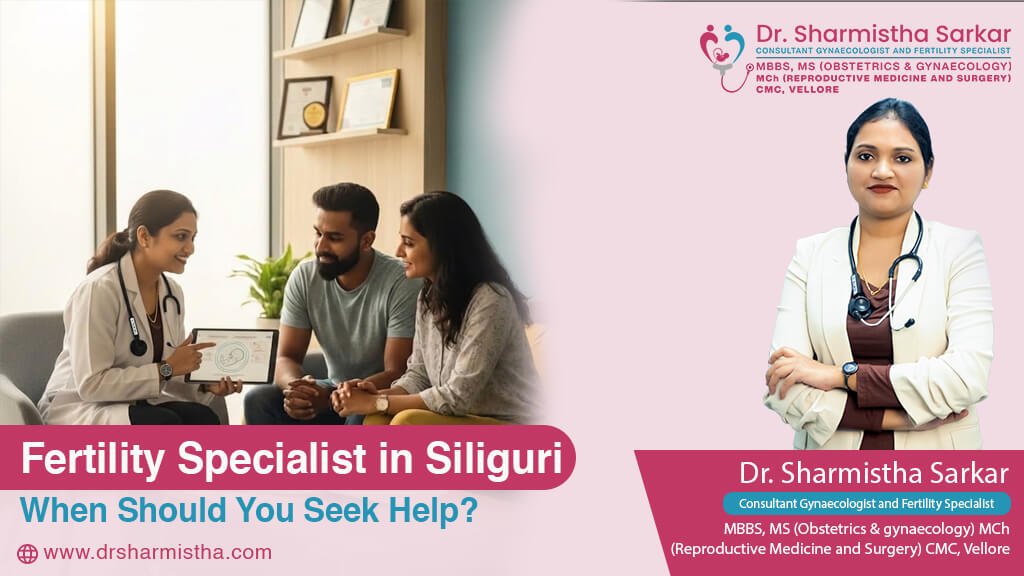
Fertility Specialist in Siliguri: When Should You Seek Help?

Starting a family is one of the most meaningful journeys a couple can take — but for many, the path to parenthood is not straightforward. A mother plays a big role in determining the happiness of a family. Expanding a family is one of the most beautiful journeys of a mother. But it is not so smooth for everyone. They face various challenges in the journey of parenthood. Attempting to conceive a baby naturally is the first step for any couple. If natural conception has not been successful, it is time to consult a fertility specialist in Siliguri. Early treatment with Dr. Sharmistha Sarkar can pave the way for determining the problem. Understanding Fertility Challenges There is a prevalence of infertility that meets the eye. It is common in both men and women and may occur because of many reasons, including hormonal imbalance, lifestyle choices, or even underlying health conditions. A fertility specialist in Siliguri is prepared to examine these problems and offer a treatment that boosts your chances of conceiving. Fertility Specialist: When Do You Need to See One? It is important to know when to see a Fertility Specialist in Siliguri. The following are some of the typical cases in which you need professional assistance: 1. More Than a Year of Trying to Conceive When you are younger than 35, and your success has not been achieved after 12 months of continuous attempts, you have to see a doctor. 2. Trying for 6 Months (Age 35 or above) In women over 35, age decreases fertility. When you have been making 6 months of attempts and have not succeeded, do not postpone the consultation. 3. Irregular Periods or Amenorrhea Abnormal menstrual cycles can be a sign of hormonal issues or disorders such as PCOS, which can influence ovulation. 4. History of Miscarriages The frequent miscarriage of pregnancy could require a medical check-up and treatment by a well-trained IVF specialist in Siliguri. 5. Known Medical Conditions Such problems as endometriosis, thyroid diseases, or diabetes may affect fertility and need professional care. 6. Male Fertility Issues Poor sperm quality or low sperm count may also cause infertility. The fertility specialist examines the partners. Basic Problems of Infertility Knowledge of the cause assists in the selection of the appropriate treatment. A few of the usual causes are: Ovulation Disorders Ovulation disorders are caused by the failure of the ovaries to release eggs in a normal manner. It can be caused by such circumstances as PCOS or hormonal imbalance, and it becomes hard to conceive. Blocked Fallopian Tubes Fallopian tubes assist in the movement of the egg. The tubes move from the ovary to the uterus. Sometimes they become blocked or damaged by infection. Therefore, the egg and the sperm are unable to meet, resulting in no fertilization. Endometriosis This is a disorder in which the tissue resembling the uterine lining develops externally. It is painful, inflammatory, and can involve the ovaries, fallopian tubes, and general fertility. Hormonal Imbalances One should be very careful to check whether the menstrual cycle and ovulation are on time. These are two of the greatest factors in determining pregnancy. Any hormonal imbalance, such as estrogen, progesterone, or thyroid hormone, can lower the rate of pregnancy. Reduced Sperm Count or Motility Male fertility issues most commonly involve a low sperm count, poor sperm motility (movement), or abnormal sperm morphology (Size and shape of sperm) — any of which can make it difficult for sperm to reach and fertilise the egg. Lifestyle Changes, Such as Stress, Smoking, or Obesity One must be aware of a healthy lifestyle. Too much stress, excessive alcohol consumption and unhealthy diet, and obesity can hamper your fertility rate. It influences both the fertility among male and females. A qualified IVF specialist in Siliguri can help you with it. Patients are given tests and recommend the most appropriate treatment. Duties of a Fertility Specialist A Fertility Specialist in Siliguri is a specialist who provides you with personalized care depending on your condition. The process usually includes: Diagnosis Blood work, ultrasound, and semen analysis are some of the tests used to determine the problem. Treatment Options There are various treatments available nowadays for a successful pregnancy. Depending on the diagnosis, treatments may include: ● Ovulation Induction Ovulation induction is a therapy that assists in the stimulation of the ovaries to secrete eggs regularly. Special medicines are administered by doctors for the management and enhancement of ovulation, particularly when a woman has irregular periods or ovulation disorders. ● Medications The initial treatment is usually fertility drugs. They are used to control hormones, increase the number of eggs in females, and, in some cases, improve the quality of sperm in men. The prescription is normally given after a specialist has assessed them. ● Intrauterine Insemination (IUI) IUI is a less invasive and not very difficult procedure where healthy sperm are directly inserted into the uterus at ovulation. This augments the likelihood of fertilization because the sperm will be brought nearer to the egg. ● In Vitro Fertilization (IVF) IVF is a high-tech fertility therapy often suggested to patients. In this treatment, eggs are retrieved from the ovaries and fertilised in a laboratory setting. The resulting embryos are then transferred to the uterus. When some other treatment fails, then this treatment is suggested to the couples. Dr. Sharmistha Sarkar, a renowned fertility specialist in Siliguri offers comprehensive fertility care. She is understanding and compassionate. She offers quality care to couples who want to have a child and fulfil their dreams. Importance of Early Consultation Sometimes, couples delay seeking help from a fertility specialist due to a lack of awareness. An early consultation will enhance the possibility of a good and successful treatment. Fertility is high among females whose age is between 20 and 30. It naturally declines with age, especially for women. Therefore, consulting and visiting a fertility specialist in Siliguri can help. Lifestyle Tips to Improve Fertility Along with medical treatment, simple lifestyle changes can improve fertility. One must follow some basic

Fertility Specialist in Siliguri: When Should You Seek Help? Read More »

How Smoking Impacts Fertility in Men and Women

Smoking and Fertility: Understanding the Hidden Impacts and Seeking Help While smoking’s adverse effects on health are widely known, its influence on fertility often goes unrecognised. For both men and women, smoking can drastically impact the chances of conceiving and maintaining a healthy pregnancy. Additionally, smoking can lead to complications that affect the health of future generations. In this comprehensive blog, we delve into how smoking impairs fertility in both genders, the mechanisms behind these effects, and the importance of seeking guidance from an infertility specialist in Siliguri. The Impact of Smoking on Female Fertility 1. Effects on Ovarian Function Women’s reproductive health is closely tied to the health of their ovaries, which produce eggs and regulate hormone levels critical for conception. Smoking introduces thousands of chemicals into the bloodstream, some of which reach the ovaries and disrupt their function. Studies indicate that women who smoke tend to experience menopause earlier than non-smokers, effectively shortening their reproductive years. Harmful chemicals in cigarettes, such as nicotine, cyanide, and carbon monoxide, are particularly damaging. These substances not only reduce hormone levels but also alter hormonal rhythms, disrupting menstrual cycles and making it harder to achieve a regular, predictable ovulation pattern. 2. Egg Quality and Quantity The quality and quantity of eggs are key to successful conception. Smoking decreases both, reducing the likelihood of a healthy embryo forming. Research shows that eggs from smokers tend to have more chromosomal abnormalities, which can lead to miscarriage or failed IVF attempts. Furthermore, the number of viable eggs a woman has decreases with prolonged smoking. Women who smoke heavily may also struggle with low ovarian reserves, meaning fewer eggs remain as they age, complicating natural conception and fertility treatments like IVF. 3. Increased Risk of Ectopic Pregnancy An ectopic pregnancy, where the embryo implants outside the uterus (often in a fallopian tube), is a severe complication that requires immediate medical intervention. Smoking greatly increases the likelihood of ectopic pregnancy. Chemicals in cigarettes impair the function of cilia—tiny hair-like structures in the fallopian tubes that guide the egg to the uterus. As a result, the embryo may implant prematurely within the tube. Ectopic pregnancies are dangerous, as they can cause the fallopian tube to rupture, leading to internal bleeding and requiring emergency care. 4. Pregnancy Complications Smoking during pregnancy exposes the developing fetus to harmful toxins, increasing the risk of complications such as placental abruption (when the placenta detaches from the uterus prematurely), preterm birth, low birth weight, and stillbirth. Additionally, the nicotine in cigarettes restricts blood flow to the placenta, reducing oxygen supply to the fetus. This oxygen deprivation can have lasting impacts on the baby’s health, including delayed growth and developmental issues. The Impact of Smoking on Male Fertility 1. Sperm Quality Sperm quality is crucial for successful fertilization, and smoking directly affects it in various ways. Men who smoke generally have lower sperm counts and reduced sperm motility (the sperm’s ability to swim towards the egg), which can prevent fertilization from occurring. Smoking also affects sperm morphology (shape), leading to a higher number of abnormally shaped sperm that cannot effectively reach and fertilize an egg. This trio—low count, poor motility, and abnormal morphology—severely diminishes a couple’s chances of conception. 2. DNA Damage in Sperm The toxic substances in cigarettes, such as tar, lead, and cadmium, cause DNA damage within sperm cells. This damage can lead to genetic mutations, which may result in miscarriage or congenital disabilities if conception occurs. DNA fragmentation in sperm is also associated with a higher risk of infertility, as damaged DNA can impede the sperm’s ability to fertilize the egg and develop into a viable embryo. 3. Hormonal Imbalances Nicotine and other chemicals in cigarettes interfere with the endocrine system, reducing testosterone levels in men. Testosterone is essential for sperm production and libido. A decrease in testosterone can lead to a reduced sex drive and lower sperm count, compounding fertility challenges. Moreover, smoking influences the production of cortisol, a stress hormone that, when elevated, can further disrupt testosterone levels and overall reproductive health. 4. Increased Risk of Erectile Dysfunction Smoking has been closely linked to erectile dysfunction (ED), as it damages blood vessels and impedes blood flow to the penis. ED can make natural conception challenging, and in severe cases, it may necessitate medical intervention or assisted reproductive technologies such as IUI (intrauterine insemination) or IVF. Research shows that men who quit smoking have a much better chance of regaining normal erectile function and improving their fertility outcomes. The Combined Effects of Smoking on Couples’ Fertility When both partners smoke, the cumulative effect of smoking on their fertility becomes more severe. Couples where both partners smoke may face significantly lower success rates in treatments like IVF and IUI. The time it takes to conceive may also be much longer, contributing to emotional strain and stress. Additionally, smoking as a couple can create a shared dependency that makes quitting more challenging, further complicating efforts to improve fertility and pregnancy outcomes. Quitting Smoking: A Pathway to Improved Fertility 1. Benefits of Quitting Smoking Quitting smoking can bring dramatic improvements to fertility and pregnancy outcomes for both men and women. Some of these benefits include: • Improved Egg Quality: Women who quit smoking can improve egg quality within a few months, making conception more achievable. • Enhanced Sperm Health: Men can see improvements in sperm count, motility, and morphology after quitting, which aids in successful fertilization. • Reduced Pregnancy Risks: Couples who do not smoke have reduced risks of miscarriage, preterm labor, and other pregnancy complications. • Enhanced Overall Health: Quitting smoking improves cardiovascular and respiratory health, benefiting both general well-being and reproductive health. 2. Resources for Quitting Smoking Successfully quitting smoking often requires support. There are several resources and methods available: • Counseling Services: Therapy, both individual and group, can provide emotional support and strategies to cope with withdrawal. • Nicotine Replacement Therapy (NRT): Patches, gums, and lozenges can reduce cravings and help manage withdrawal symptoms. • Medications: Prescription medications like varenicline and

How Smoking Impacts Fertility in Men and Women Read More »