
Your Future. Your Timeline. Your Choice
Suppose you are 28, successful in your career, maybe still seeking the right person, or even just not ready to have a child yet, and that your biological clock doesn’t stop to wait for any of that. As women age, their egg count and quality naturally decrease — making it harder to conceive over time. For many women, this biological reality clashes with the demands of building a career, pursuing education, managing health challenges, or simply not being ready yet.
The good news? Modern medicine has given women something that is unheard of; the power to stop time biologically.
Oocyte cryopreservation, also referred to as egg freezing, is among the most empowering fertility preservation techniques present-day. As you sail through a cancer diagnosis, as you plan your future, or as you just desire the freedom to form your own family at your own pace, the egg freezing procedure can offer you choices that were, literally, unavailable a generation ago.
What Is Egg Freezing?
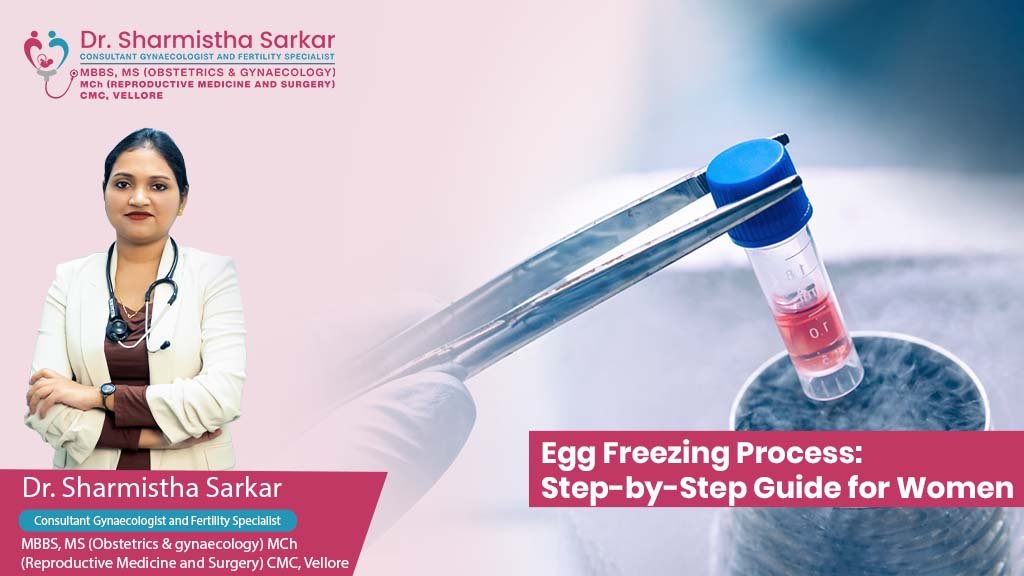
Egg freezing is a fertility preservation technique where the eggs (oocytes) of a woman are taken out, frozen, and stored to be used later. She is ready to conceive, and the eggs are thawed, fertilised with sperm in the laboratory, and the resulting embryo is transferred into the uterus.
This method of cryopreservation of eggs was once thought to be an experiment. It is now an established, medically accepted practice – and the rates of success have dramatically increased with the use of a process known as vitrification (freezing-flashing), which radically lowers the amount of ice crystals and the quality of the egg.
Who Should Consider Egg Freezing?
The preservation process of the eggs applies to a large group of women, such as:
Late 20s or early 30s women who are yet to conceive.
- Women with cancer who require fertility preservation before chemotherapy or radiation.
- Women who have diseases such as endometriosis or premature ovarian insufficiency.
- Women intending to have gender-affirming procedures.
- Women who merely desire reproductive insurance to rest easy
Egg freezing is best done below 35 years due to the optimum egg quality and quantity at that age. Nevertheless, a consultation can still be beneficial to women even in their early 40s.
Step-by-Step the Egg Freezing Process
Being aware of every step of the fertility preservation process will help you become less anxious and will enable you to make wise decisions. The following is what to expect:
Step 1: Initial Consultation & Fertility Assessment
Your experience starts with an extensive consultation. In this visit, I evaluate:
- Ovarian reserve – through blood tests of AMH (Anti-Mullerian Hormone) and FSH (Follicle-Stimulating Hormone) levels.
- Antral follicle count (AFC) – through transvaginal ultrasound to determine the number of eggs on board.
- General reproductive health – medical history and lifestyle.
This assessment will provide us with a good understanding of the manner in which your ovaries will react to stimulation and the number of eggs that we can reasonably anticipate retrieving.
Step 2: Ovarian Stimulation (Days 1-12)
After being cleared to undergo the procedure, you will start controlled ovarian hyperstimulation (COH). This involves:
- Hormone injections (gonadotropins) are self-administered daily (usually 10-12 days).
- These hormones make the ovaries produce more than one egg in a cycle, which is the usual one.
- Frequent blood monitoring and ultrasound (2-3 days) to monitor follicle development and levels of hormones.
- Dosage modifications according to the requirements to optimize the response and reduce the chances of ovarian hyperstimulation syndrome (OHSS).
The majority of women are able to cope with this stage. Light bloating or mood swings are normal and short-term.
Step 3: Trigger Injection
When follicles are of the ideal size (around 1820mm), a trigger shot (usually an hCG or a GnRH agonist) is applied. The injection completes egg maturation and is carefully timed – the egg harvest is 34-36 hours later.
Step 4: Egg Retrieval
The minimal-invasive procedure under mild sedation or anaesthesia will make you feel comfortable during it.
A fine needle is inserted, with the help of transvaginal ultrasound, into the ovarian follicles through the vaginal wall. The fluid, in which the eggs are held, is aspirated. The entire procedure takes about 20–30 minutes.
A temporary rest in the recovery area will follow, and you will be discharged on the same day. The majority of the women resume normal activity after 24-48 hours.
Step 5: Egg Freezing (Vitrification)
After retrieving, the eggs are directly evaluated by an embryologist. Freezing is done to mature eggs (MII stage).
The eggs are then quickly frozen to -196 °C using liquid nitrogen — a process that prevents ice crystal formation and preserves structural integrity. The ultra-fast freezing prevents the appearance of ice crystals. That may cause destruction of the fragile egg structure. This greatly improves the survival rates when the egg is thawed.
The duration of frozen egg storage is 10 years or longer, depending on local laws.
Step 6: Storage
Your frozen eggs are kept in a cryopreservation facility with strict conditions. They are tagged, indexed, and checked constantly to provide integrity.
When You Are Ready: Embryo Transfer Process
When you choose to use up your frozen eggs, then this is what will occur:
- Thawing – Eggs are slowly warmed; most eggs can withstand the thaw (8090%).
- Fertilisation – A single Sperm (that of a partner or donor) is inserted using ICSI (intracytoplasmic sperm injection) to fertilise the egg.
- Embryo growth- the fertilised egg grows in the lab over a period of 3-5 days.
- Embryo transfer — This is a painless, fast procedure, which does not need anaesthesia and is done with the help of a catheter, inserting the embryo into the uterus.
- Pregnancy test– It is a blood test about 10-14 days following the implantation. It determines whether the implantation was successful.
How Many Eggs Do You Need?
This is one of the most common questions patients ask. As a general guide:
Age at Freezing | Recommended Eggs for ~70% Success Rate |
Under 35 | 10–15 mature eggs |
35–37 | 15–20 mature eggs |
38–40 | 20–25 mature eggs |
Some women may require more than one stimulation cycle to reach these targets — and that is completely normal.
Is Egg Freezing unsafe?
Yes — egg freezing is a safe procedure for the vast majority of women. The primary harm is ovarian hyperstimulation syndrome (OHSS), which is experienced by a relatively small percentage of patients and is closely monitored and treated.
There are no records of a higher risk of birth defects and chromosomal anomalies in children born out of frozen eggs than in children conceived naturally.
Why Women Trust Dr. Sharmistha Sarkar for Fertility Care?
The selection of the appropriate fertility specialist is an effective decision a woman makes. This is the reason why patients will always prefer Dr. Sharmistha Sarkar:
Deep Specialisation – Specialisation in fertility preservation, the methods of egg cryopreservation, and assisted reproductive technologies.
Individual Treatment Plans – Dr. Sharmistha Sarkar does not develop one-size-fits-all protocols, but an individualised one.
High Technology — The latest technology of vitrification and embryology lab standards are used to maximize the rate of egg survival and overall success.
Clear, Open Consultations — Patients are given straightforward, evidence-based data regarding achievable success rates, payment, and timeframes. They are free to make decisions without coercion.
Compassionate Care — It may be emotionally stressful during fertility journeys. Dr. Sarkar and her team ensure stability in the process at all levels.
Final Statement From Dr. Sharmistha Sarkar
The practice of freezing eggs is not a medical act by itself, but a self-determination. It is the decision to live your life to the fullest today and leave your future unlimited.
If you are curious about whether egg freezing is right for you, the best first step is a conversation. The fertility journey of every woman is different. Dr. Sharmistha Sarkar provides you with the information and support you desire quickly and without coercion, on your time.
Make an appointment with Dr. Sharmistha Sarkar and take the first step toward saving your future.