
The journey to parenthood looks different for everyone — and so does the path that gets you there.
When a couple decides to seek help conceiving, the first appointment with a fertility doctor can feel like walking into a foreign country. The words are not familiar, and the feelings are crude, and suddenly we are told about two abbreviations, IUI and IVF, as if they were common words we use.
They have not. And they are very seldom elucidated as ought to be.
They may be only starting to consider fertility options, or in the middle of the journey and realising that every choice is wrong, but this guide presents a transparent, non-judgmental, and actually practical explanation of IUI vs IVF, what they are, how they work, who they are suitable for, and how to consider which is better than the other. You need to consult a fertility specialist to know about your problem and proceed further with the latest medical treatment.
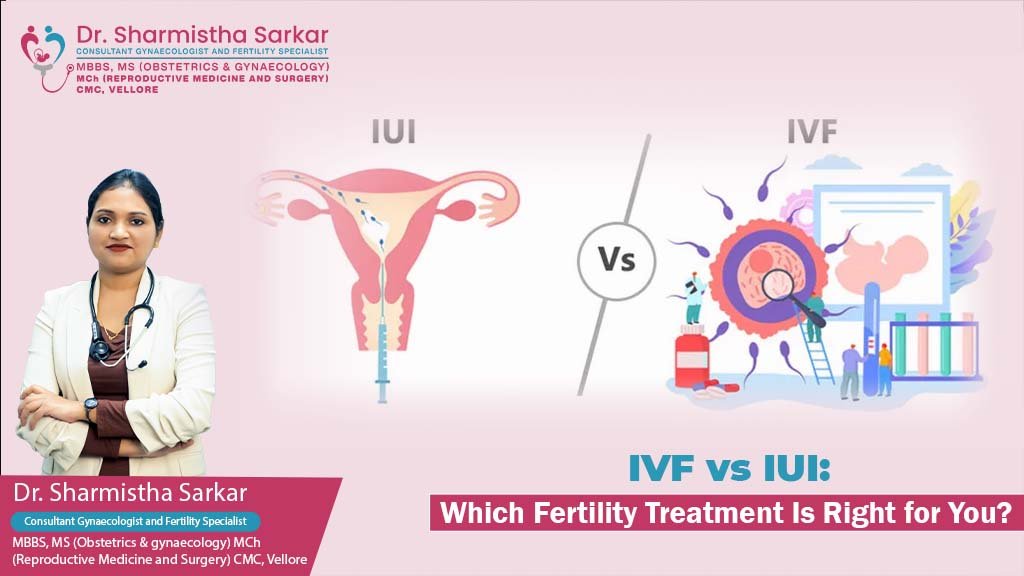
What is IUI, and How does it Work?
One of the simplest procedures of assisted reproductive therapies today is Intrauterine Insemination -IUI -. In a natural conception cycle, the sperm have to pass through the cervix and the fallopian tubes so as to find an egg and fertilise it. So much can go awry in that journey. IUI makes it much shorter.
A sperm sample is obtained, which in this instance is processed in a laboratory where it is concentrated into the healthiest and motile sperm, and it is then inserted directly into the uterus via a thin and flexible catheter on or around the time. Fertilisation always occurs naturally, within the body. IUI only provides sperm with a big head start.
The process lasts approximately 10-15 minutes. The majority of women report it to be slightly uncomfortable at its best, which is the likes of a regular check-up by a gynaecologist. No sedation, no surgery and no hospital stay is needed. There are cases where a mild course of oral medication or low-dose injections of hormones will be added to IUI to stimulate the ovaries and make sure that the ovulation is performed at the appropriate timing.
What is IVF and how does it work?
IVF (In Vitro Fertilisation)takes the fertilisation process completely out of the body, especially to the most crucial stage of it. The general procedure of an In Vitro Fertilisation cycle looks like this:
Ovarian stimulation -Injectable hormones are administered for about 10 to 14 days to stimulate the ovaries to form more than one egg; instead of the one released during a natural cycle. This is kept track of by blood tests and an ultrasound scan.
Egg retrieval -After the eggs have matured, they are collected using a minor surgical procedure that is done under light sedation. It is approximately 20-30 minutes.
In vitro fertilisation –The eggs are collected and fertilised in vitro with sperm. A valiant effort is to try to treat severe male infertility by applying a procedure known as ICSI -Intracytoplasmic Sperm Injection – in which one sperm is microinjected directly into each egg to increase the likelihood of fertilisation.
Embryo development-The fertilised eggs are observed as they mature into embryos and a period of three to five days. The quality of their laboratories is evaluated by the laboratory specialists during this time.
Embryo transfer -A single or more healthy embryos are implanted into the uterus through a thin catheter. Any of the possible embryos may be frozen to be used in the future.
Two week wait-A blood pregnancy test is conducted 10-14 days after transfer.
IVF is more physically strenuous, more emotionally charged and more costly than IUI. It is also much more efficient for the right patients.
IUI and IVF Are Not Alternatives -They Are Different Treatment
One of the most common misconceptions in fertility treatment is that IUI and IVF sit on a simple ladder -IUI being the easy first step and IVF being the heavy-hitting last resort. This framing is not just inaccurate. It is genuinely harmful to patients trying to make informed decisions.
The reality is more nuanced.
IUI( Intrauterine insemination) assists the natural process. It does not replace it. For IUI to work, the fallopian tubes must be open and functional. Ovulation must occur, and sperm quality must be at least moderate. When those conditions are met, IUI is an effective process and evidence-based starting point.
IVF(In vitro Fertilisation) bypasses the fallopian tubes completely. It allows specialists to select the healthiest embryos. It provides clinical information that no other treatment can offer. It is more invasive, more costly, and more emotionally demanding.
The decision between them is not about bravery or giving up. It is about matching the right treatment to the right diagnosis.
The Emotional Reality
Both treatments demand something of you emotionally. The hormonal shifts, the two-week wait, the hope, the uncertainty -these are not side effects. They are part of the experience, and they are real.
IVF, with its more intensive cycle, can feel physically and emotionally exhausting in a way that catches many couples off guard. IUI, though simpler, carries its own quiet heartache when cycles do not succeed. Whatever path you take, emotional support -whether through counselling, honest conversations with your partner, or a community of people who understand -matters as much as the medical protocol itself.
Understanding Success Rates -What the Numbers Actually Mean
All fertility centres publish success rates. Every patient studies them. And almost every patient misinterprets them. The truth is that these numbers mean very little without context -because success in fertility treatment is not determined by a clinic’s headline figure or the protocol a specialist prefers. It is determined, above all else, by age -and more precisely, by ovarian age, which does not always match the number on a birthday.
IUI Success Rates -Key Facts:
- Average success rate per cycle ranges between 10% and 20%
- The rate varies based on age, diagnosis, and whether ovarian stimulation was used
- For women under 35 with unexplained infertility and a partner with mild motility issues, three well-monitored IUI cycles offer a meaningful cumulative chance of success
- At significantly lower cost and physical burden than IVF
- In the right candidate, starting with IUI is not second best — it is smart, evidence-based medicine
IVF Success Rates -Key Facts:
- Success rate per cycle is approximately 40% to 50% for women under 35 using their own eggs
- For women over 40, that rate drops to around 15% or lower when using their own eggs
- At this stage, the clinical conversation shifts significantly
- In certain cases, egg donation becomes the most honest and effective path forward
The Most Important Variable of All:
- The single biggest predictor of success in both IUI and IVF is not the clinic selected or the stimulation protocol used
- It is age — specifically ovarian age, not chronological age
- Ovarian age reflects egg quality and reserve — and it does not always match how old a patient is
- Investigation of ovarian age must always come before any treatment decision is made
The Tests That Should Never Be Skipped
Before any treatment decision is made, certain investigations are essential and non-negotiable. Skipping them to “save time” almost always costs significantly more time in the long run. Treating without a diagnosis is guesswork — and in fertility medicine, guesswork costs cycles that patients cannot afford to lose.
For women:
- AMH (Anti-Müllerian Hormone) -reflects ovarian reserve and is one of the most critical numbers in fertility assessment
- Antral Follicle Count via ultrasound -counts the resting follicles currently available in the ovaries
- Day 2/3 FSH and estradiol -provides an essential baseline hormonal picture
- HSG or HyCoSy -confirms whether the fallopian tubes are open and unobstructed
- Uterine evaluation -rules out fibroids, polyps, or structural abnormalities that could affect implantation
For men:
- Semen analysis -assessing volume, count, motility, and morphology
- If results are abnormal: repeat analysis, a hormonal panel, and in some cases genetic testing
These investigations do not delay treatment. They ensure the right treatment is chosen from the outset.
When IUI Is the Right Starting Point
IUI is the appropriate first-line treatment when:
- The patient is under 35 with a reasonable ovarian reserve
- Fallopian tubes are confirmed open and healthy
- Sperm parameters are mildly to moderately reduced — not severely abnormal
- The diagnosis is unexplained infertility
- The couple prefers a less invasive approach and has time on their side
- The cycle involves donor sperm for single women or same-sex couples
Most fertility specialists recommend no more than three IUI cycles before reassessing. If three monitored, well-timed cycles do not result in pregnancy, continuing with IUI is rarely supported by clinical evidence. That is the point at which the conversation about IVF becomes essential.
When IVF Is the Right First Step
There are clinical situations where IUI is not just unlikely to succeed -it is simply the wrong treatment for the diagnosis. These include:
- Blocked, damaged, or surgically absent fallopian tubes
- Severe male factor infertility, including azoospermia, where surgical sperm retrieval combined with ICSI is required
- Significant endometriosis affecting tubal or ovarian function
- Diminished ovarian reserve, where every cycle carries real clinical weight
- Women aged 38 and above, where time is a clinically significant factor
- Repeated IUI failure -three cycles without success is a clear and important signal
- Couples who wish to pursue preimplantation genetic testing to screen embryos prior to transfer
In these situations, beginning with IUI is not a conservative choice. It is a loss of time that patients in these categories genuinely cannot afford.
The Cost Difference -A Practical Consideration
All fertility centers are releasing success rates. Each patient learns about them. And almost all of the patients get them wrong.
The following is the literal meaning of those numbers.
The average success rate of IUI( Intrauterine insemination (IUI)cycle is 10-20%, depending on age, diagnosis, and the use of ovarian stimulation. And this sounds modest – and it is. But in the case of an unexplained infertile woman that is below the age of 35 and the partner has mild motility problems, three well-monitored cycles of the IUI are a substantial cumulative probability of success at far less cost and physical expense. In such a case IUI is not the second best to start with. It is evidence-based intelligent medicine.
There are significantly improved IVF success rates per cycle – around 40-50% in women younger than 35 with their own eggs. However, the figure that is seldom discussed is that among women above 40, the rate decreases to about 15% or even below when using their own eggs. The medical discussion at that point takes a completely new twist, and egg donation is the most transparent and efficient way out, in certain instances.
Time is the most significant factor in fertility treatment; the clinic and protocol do not matter.
It is not the type of clinic chosen or the type of stimulation used that is the single most crucial predictor of success in IUI or IVF. It is age -and to be more precise, it is ovarian age, not necessarily the chronological age of a patient.
The Emotional Weight Nobody Talks About Enough
The clinical protocols are only one part of the fertility treatment experience. The emotional reality -the monthly grief, the hormonal turbulence, the strain placed on relationships, and the quiet, relentless effect of hope repeatedly stretched and broken -is equally significant and far less often discussed.
The emotional experience of fertility treatment is a medical concern, not a personal weakness. Anxiety and depression during fertility treatment are common, documented, and entirely valid responses to an extraordinarily difficult process. Couples who receive psychological support alongside medical treatment show measurably better outcomes -not just emotionally, but in some clinical studies, in treatment results as well.
If a clinic does not proactively ask about emotional well-being, patients should raise it themselves. Every person going through fertility treatment deserves to be seen as a whole human being -not simply as a set of test results.
Why Choose Sharmistha Sarkar?
Don’t just look at the procedure of fertility treatment-look at the way your doctor handles things. That is where many couples in Siliguri consider Dr. Sharmistha Sarkar unique.
Personalised Treatment Plan
Every woman’s fertility is unique, and so will the treatment need be. Age, history, hormonal balance and lifestyle of the patient will be checked, and then only a treatment is proposed. This will help avoid hit-and-trial methods and will also ensure maximum results for treatment.
Clear understanding of IUI and IVF
Most couples remain confused as to which procedure of artificial reproduction to go for-IUI or IVF. Dr Sharmistha Sarkar explains both procedures of artificial reproduction, including when to consider them, their cost, success rates and duration, etc. So that the patient and her partner do not rush into artificial reproduction when a less intense method will also work for them.
Emphasis on identifying the cause
Instead of going for treatment right away, she puts a lot of emphasis on identifying the cause for infertility, whether it be hormonal imbalance, issues with ovulation, male factor infertility, PCOD, etc. When the basic cause is treated, the long-term results are much better.
Emotional Guidance
Undergoing artificial reproduction may be physically and mentally stressful for most patients. Patients found her calm, approachable and empathetic, which definitely eased their stress and anxiety throughout the whole period of artificial reproduction, and the effects of the treatment are a definite plus.
Basic to Advanced infertility management:
The treatments from ovulation induction and IUI to the highly complicated procedures of IVF are carried out by her. It is very unlikely that the patient may need to get treated by another specialist or facility during the entire duration of treatment.
Frequently Asked Questions (FAQs)
Q1. Is IUI painful?
Q2. How many IUI cycles should I try before moving to IVF?
Q3. Is IVF the only option if IUI fails?
Q4. Can IVF guarantee pregnancy?
Q5. Are fertility treatments available in Siliguri?
Final Thoughts
Nobody plans to need medical help to have a child. But for millions of couples around the world, fertility treatment has made parenthood possible in a way that would simply not have existed a generation ago.
Fertility medicine has advanced more in the last twenty years than in the entire century before it. Genetic screening, improved laboratory techniques, frozen embryo transfers, and egg freezing now offer genuine options to patients who would have had none two decades ago.
But the most powerful factor in any fertility journey is not the technology available. It is the decision to be informed -to ask questions, to understand the diagnosis, and to choose a clinic and specialist who treat every patient as an individual rather than a case number.
IUI or IVF -neither is a guaranteed solution. Both are evidence-based, clinically proven paths that have helped millions of families welcome children they would not otherwise have had.
Know the diagnosis. Understand the options. Trust the process -and ask every question along the way.